The Byrne Group were delighted to be awarded a Green Certification from MyGreenLabs, as part of Research Ireland’s Sustainable Laboratory Certification Pilot Programme. In Lab A2.01, we worked together with Tom Hooper’s and Andrew Phillips’ Groups to identify sources of waste, establish new recycling streams (e.g. for KimTech gloves), and pool resources where possible to limit duplication of purchases. It was a really worthwhile process and has made us more considerate of reducing negative environmental impacts of our research. Sophie Kavanagh joined a UCD-wide working group on wet lab practices as part of our actions, and we have participated in chemical swap days, further reducing wastage. We continue to meet and share ideas, which will hopefully keep us up to date with developments in this area
Marking the announcement of 72 Sustainable Laboratory Certifications awarded today to research spaces in 12 higher education institutions across Ireland were (left-right) Minister for Further and Higher Education, Research, Innovation and Science, James Lawless TD; Prof. Emmanuelle Graciet, Faculty of Science & Engineering, Maynooth University; and Dr Ciarán Seoighe, Deputy CEO, Research Ireland.
Announcing the awards, Minister Lawless said:
“Research involves more than exploration and discovery; it also demands attention to how we conduct our work and the impact it has on our communities and our planet. Research carries with it a responsibility to operate with integrity, to use resources wisely, and to ensure our pursuit of knowledge does not come at an unsustainable cost to the world around us. I warmly congratulate all the laboratory teams recognised today for their commitment to greener practices. This initiative, led by Research Ireland, marks a significant and encouraging step in placing sustainability at the centre of our national research system and signals Ireland’s intent to lead by example on climate-conscious innovation.”
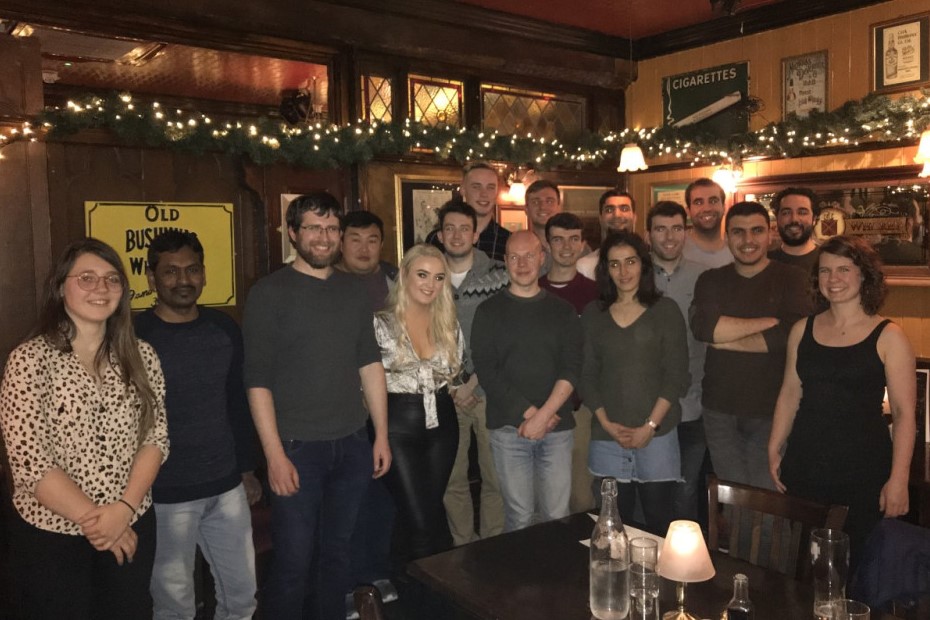
We brought the year to a close with a Christmas group lunch in Hyde, Galway. We also celebrated the completion of the fourth year undergraduate research projects. Shivon Karundu, who carried out her project in our lab celebrated with classmates at the research poster session in the School. Well done on a productive year!
In a busy summer, Joe presented his work in talks at the Molecular Sensors and Logic Gates Meeting (Dublin) and European Biological Inorganic Chemistry Symposium (Grenoble), while Karolina gave an oral presentation at the International Carbohydrate Symposium. Through these presentations, the team have been able to share their latest results from the SFI-funded project with various audiences and field questions and suggestions. Our interdisciplinary work involves using carbohydrate-functionalised metal complexes to sense bacterial proteins. With two years of no international conferences, it has been more valuable than ever to share our results with colleagues and catch up on other developments in the various fields of interest to our work.
Invited talk: “Sweetness and Light: Luminescent tools for sensing bacterial carbohydrate-binding proteins”, Joseph Byrne, 7th International Conference on Molecular Sensors and Molecular Logic Gates, 15 July 2022 (Dublin, Ireland) [Programme]
Oral presentation: “Shining a Light on Bacteria : Lanthanide- based Glycoconjugate Molecular Sensors for Lectins”, Karolina Wojtczak, 30th International Carbohydrate Symposium, 13 July 2022 (Online) [Programme]
Oral presentation: “Carbohydrate-functionalised metal complexes: targeting bacterial carbohydrate-binding proteins for therapeutic and diagnostic applications”, Joseph Byrne, 16th European Biological Inorganic Chemistry Symposium, 20 July 2022 (Grenoble, France) [Programme]
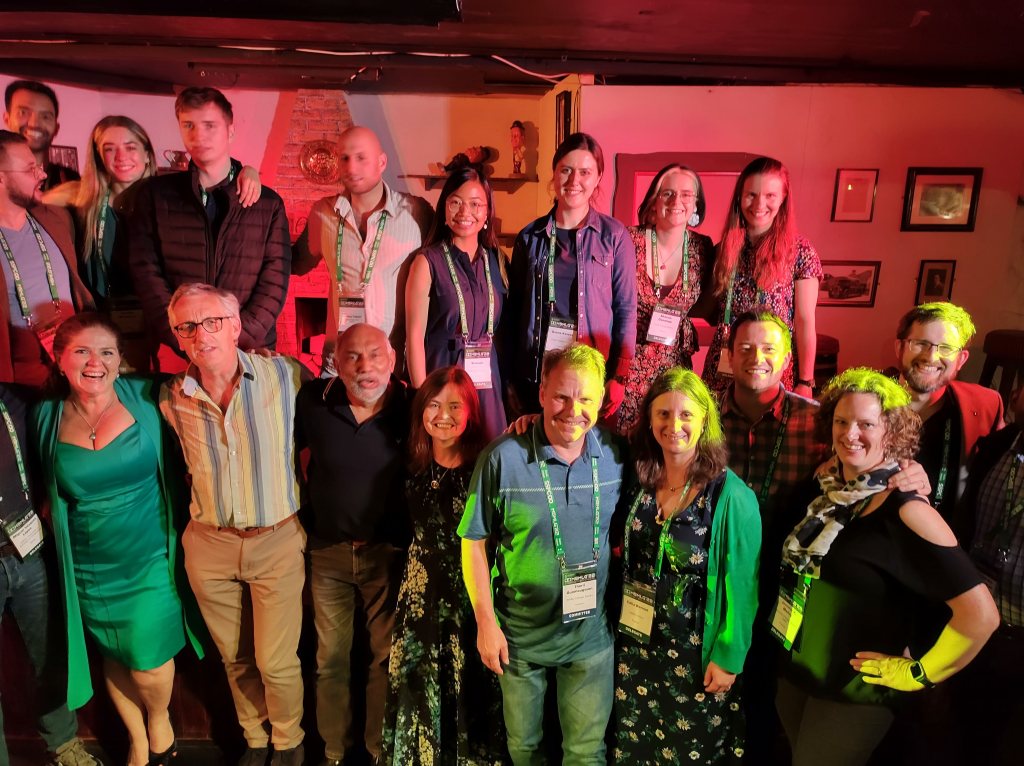
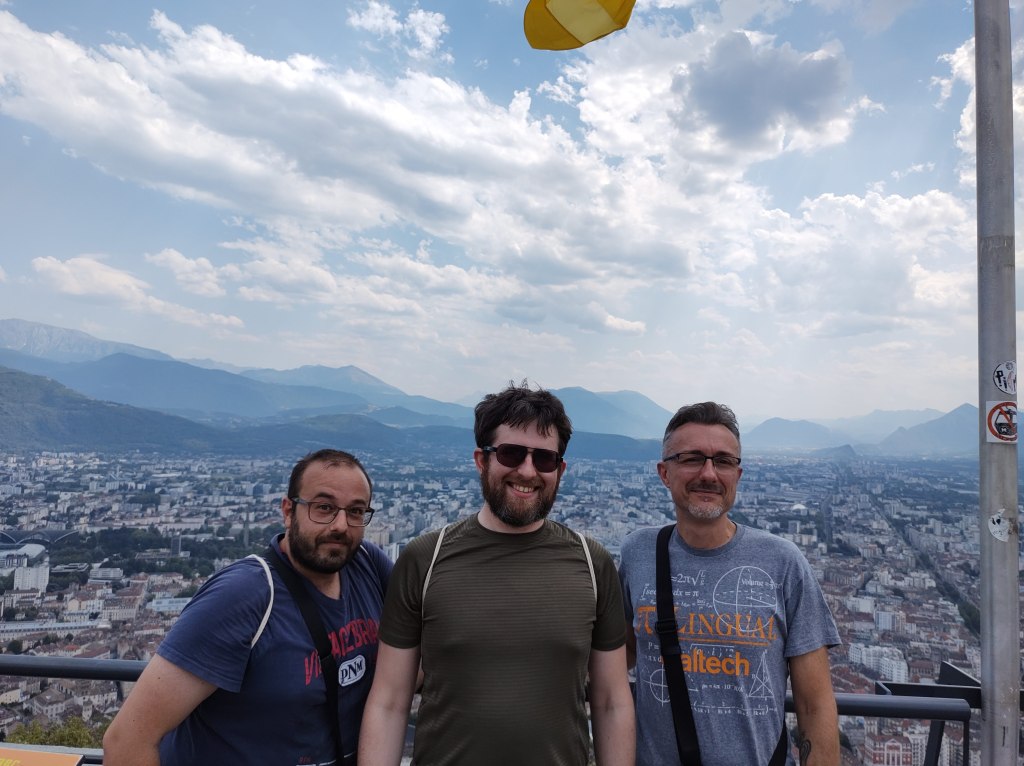
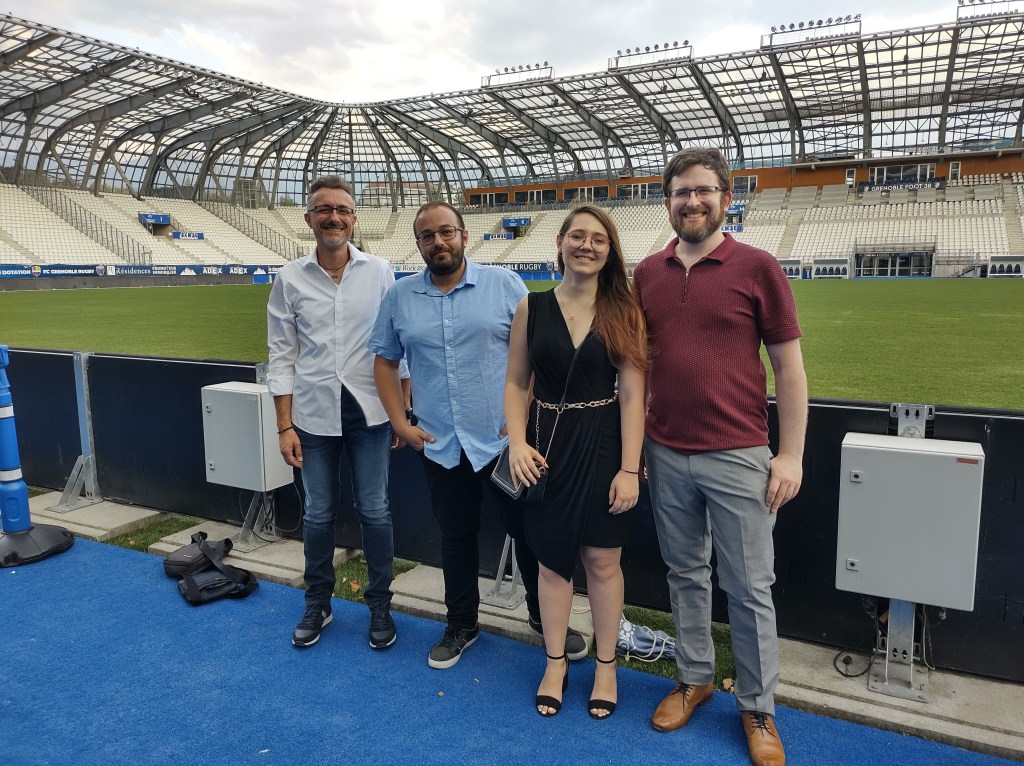
Joe speaking at MSMLG in DublinJoe and Karol at the poster session in MSMLGGroup photo from MSMLGJoe with Luca Ronconi and Ioannis Titlas (also NUIG) at EuroBIC GrenobleThe Galway delegation at the gala dinner of EuroBIC in Grenoble Stade des AlpesJoe speaking at EuroBIC in Grenoble
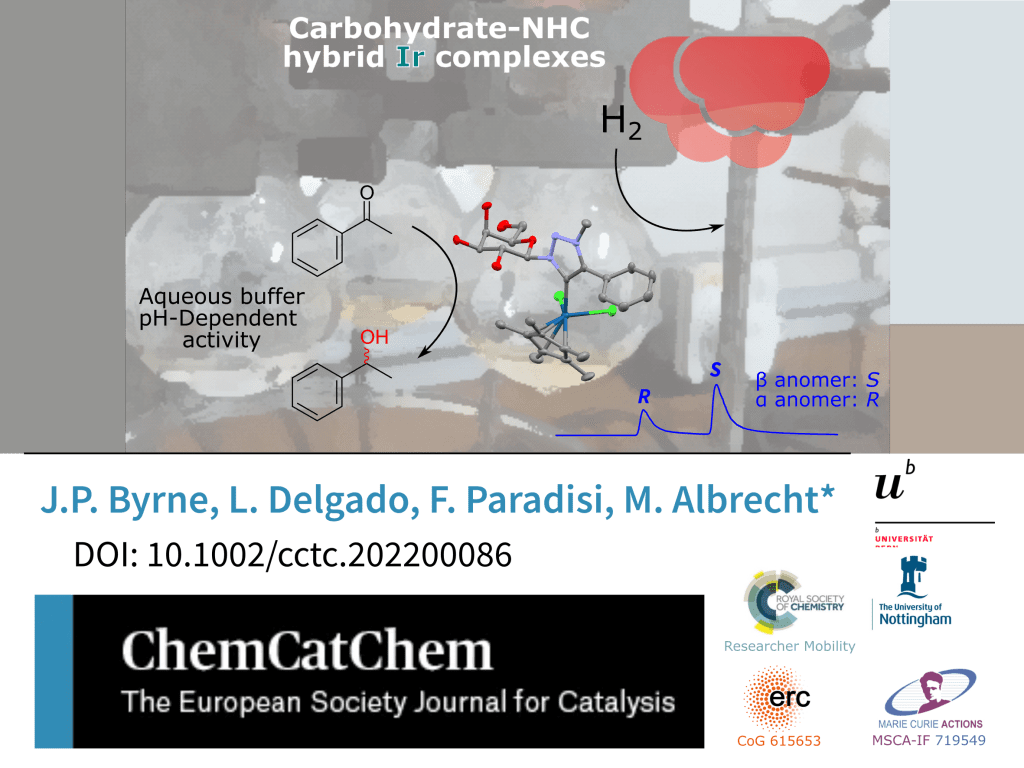
A new article from Joe’s Marie Curie Fellowship in Bern reports the catalytic activity of carbohydrate-N-heterocyclic carbene hybrid iridium complexes, which can hydrogenate ketones with modest enantiomeric induction (depending on the carbohydrate geometry).
“Carbohydrate-functionalized triazolylidene iridium complexes: hydrogenation catalysis in water with asymmetric induction” was published in ChemCatChem, as part of a special collection on Carbohydrate Chemistry and catalysis.
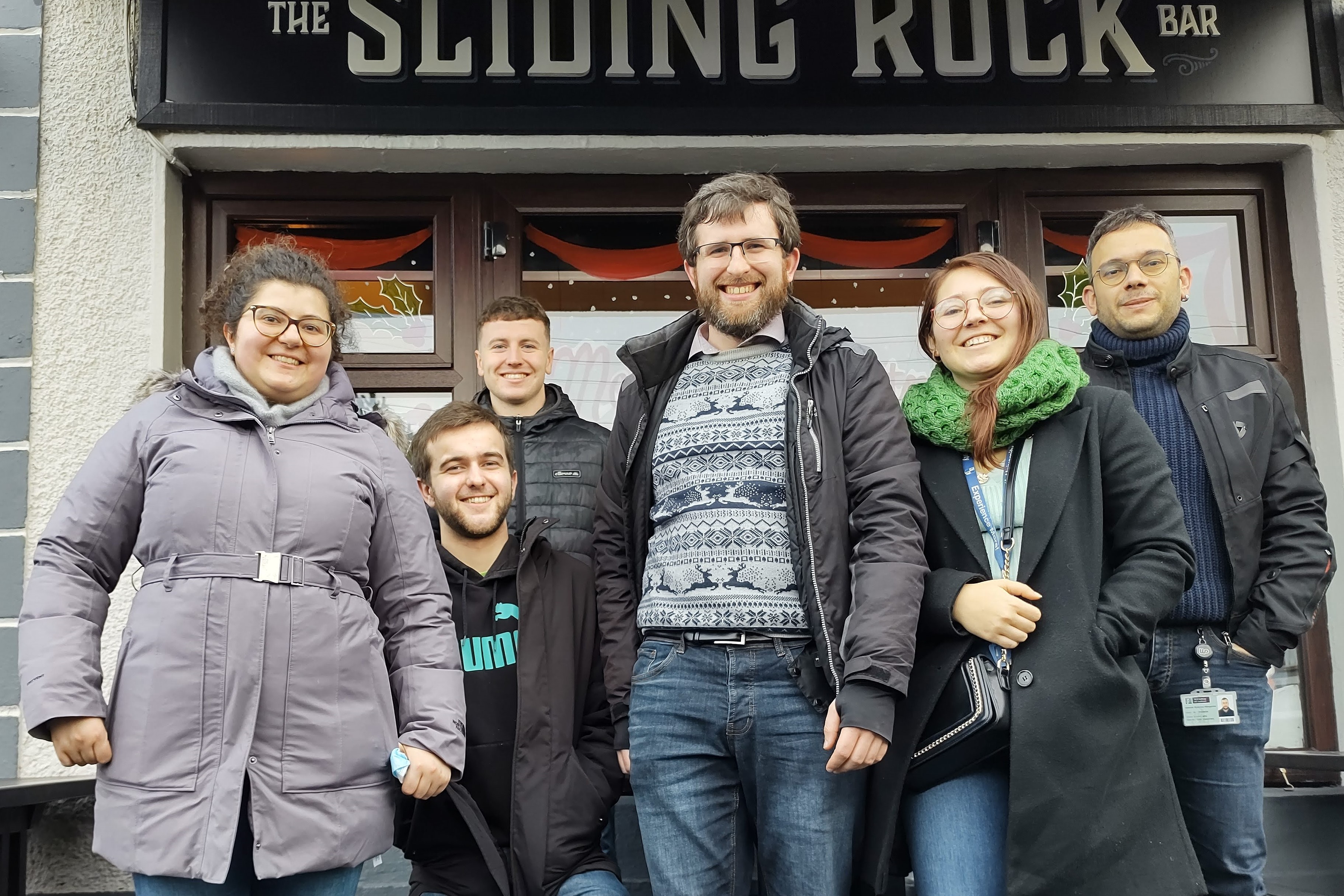
To celebrate the end of the year, the group all joined for a Christmas lunch before the end of term. Thanks to Karol, Rosy, Ioannis, Tiernan and Patrick for all the hard work in the lab in 2021.
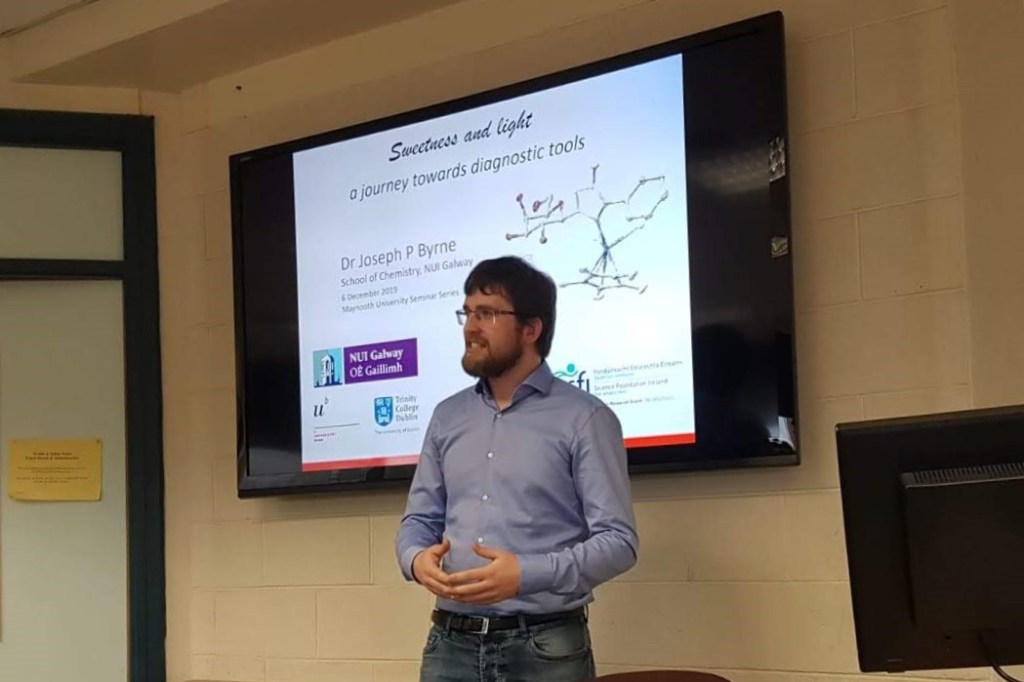
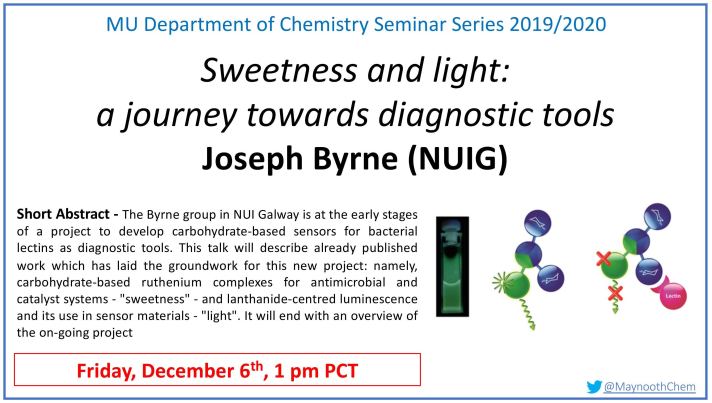
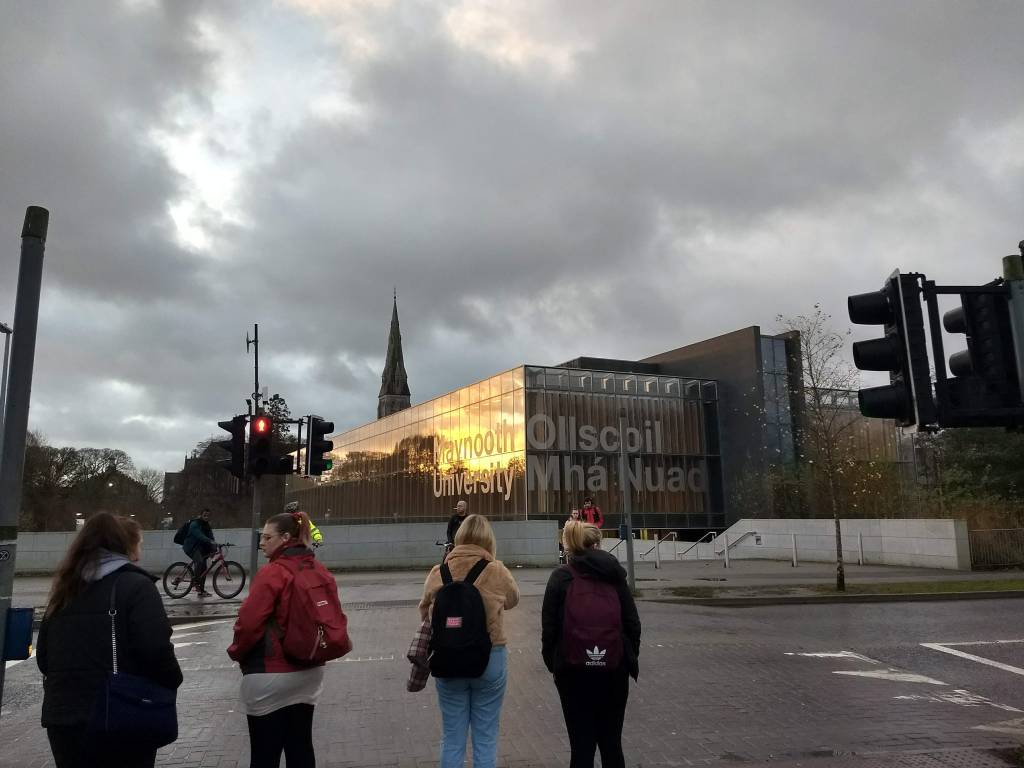
Joe was invited to give a seminar in his alma mater Maynooth University on 6th December 2019. He spoke about his research into luminescence and carbohydrates and how his current project is bringing these together. The presentation was titled: “Sweetness and light: a journey towards diagnostic tools”.
There was some good discussion afterwards with staff and students of the Department of Chemistry, and a lunch with Dr Diego Montagner and Dr Elisa Fadda, to further continue the conversation.
For the first time in 427 Trinity Alumni met in Galway with the Provost. Lovely to hear about all the significant new developments to TCD's campus and to meet with some new @nuigalway colleagues. https://t.co/7UfELoc10s
— Iósaf Ó Beirne (Dr Joe Byrne 👨🔬🧪) (@anbeirneach) October 23, 2019
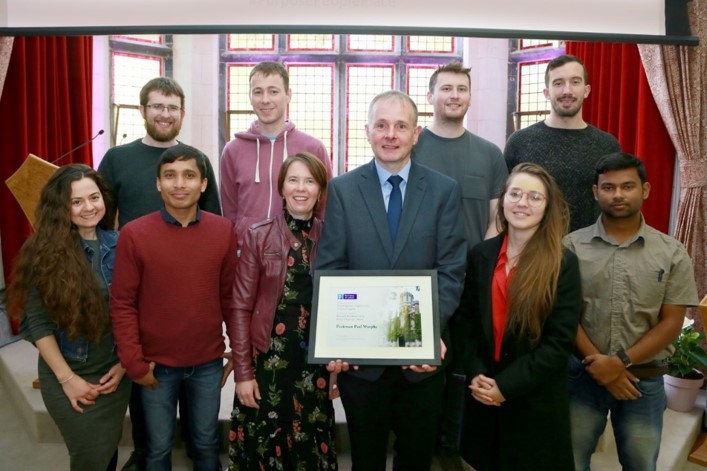
Congratulations to Prof Paul Murphy on his recognition by NUI Galway with a Research Supervision Award, reflecting his commitment to training PhD students and postdocs through the years. Paul is Joe’s SIRG-mentor and co-supervises Karolina’s PhD project. We are very grateful for his support and hosting us in his lab space at NUI Galway. The award is very well deserved!
Prof Paul Murphy along with researchers he currently supervises at the awards ceremony
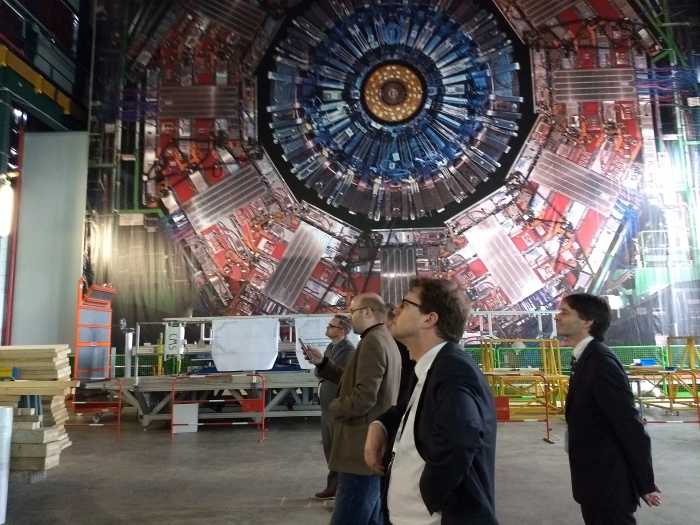
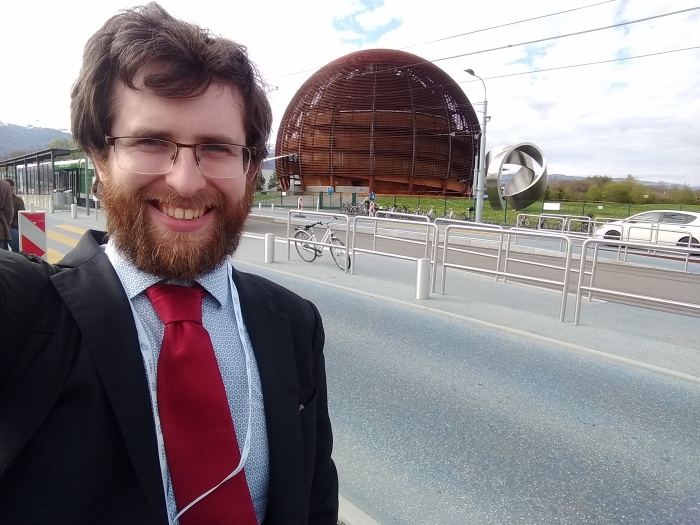
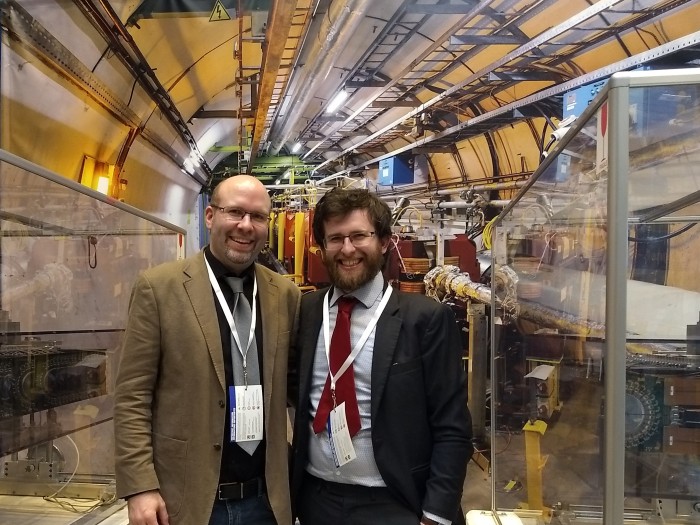
It’s always nice to have an opportunity to see behind the curtain, and all the better if you feel like you’re doing it for a good reason. I was fortunate enough to be invited to join the delegation of Irish parliamentarian James Lawless TD on a fact-finding mission to CERN, the particle physics research centre which straddles the Swiss-French border in a way that is a metaphor for how it brings countries together.
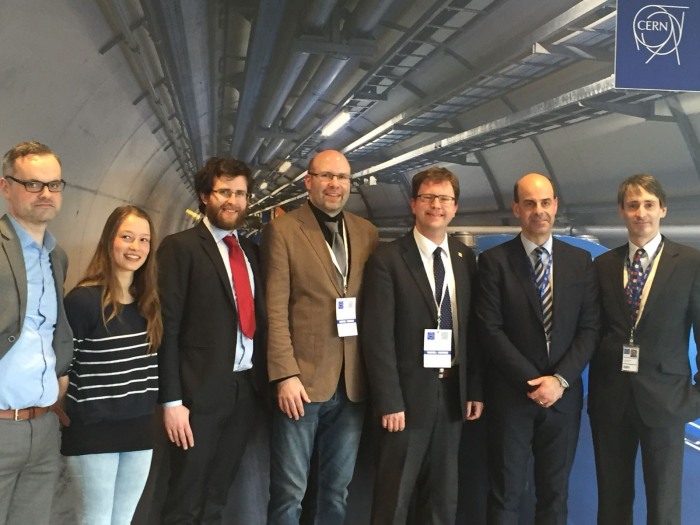
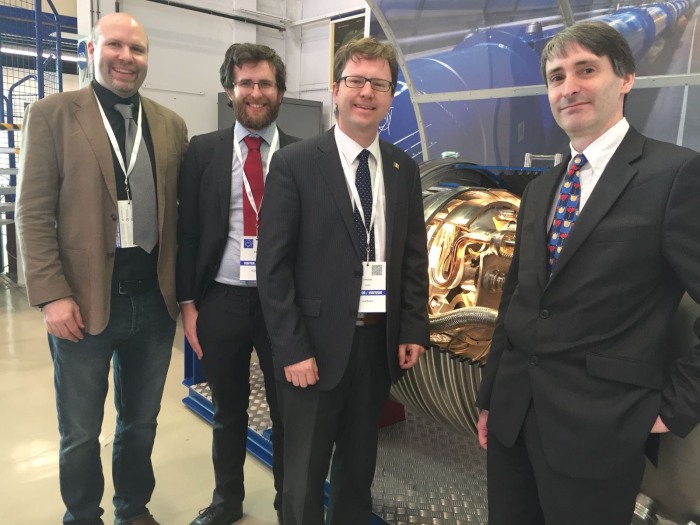
The delegation and some Irish-linked scientists with CERN’s Professor Emmanuel TsesmelisAt CMS, being given the tourMe outside CERN’s main entranceAt LHCbA decommissioned part of the LHC outside in the Swiss countrysideThe delegation being shown a model of an LHC segment in the factoryInformal meeting with the Irish Ambassador in Geneva
Deputy Lawless, Prof Ronan Nulty, Dr Kevin Byrne (both of UCD, Dublin; School of Physics and School of Medicine, respectively), and myself visited the facility and met with leaders and scientists who make it work. The aim of the trip was for CERN to put the case for Irish membership of the body to us, for us to see what benefits would come to the country via participation in the many exciting ground-breaking projects happening, and for Deputy Lawless, as opposition Science and Technology spokesperson on to bring this back to the relevant Oireachtas committees and lobby for Ireland making room in its 2019 budget for CERN membership.
It was wonderful to tour the sprawling campus of rolling fields which lie no less than 50 metres above the Large Hadron Collider and visit the various experiments set up along its 26.7-km circumference. At ALICE, CMS and LHCb (‘b’ for ‘beauty’, a flavour of quark) we met scientists, enthusiastic to talk about their work in everything from fundamental particle physics, to medicine and data processing. I was particularly interested by some work at ISOLDE using radioactive lanthanide isotopes in medical applications in hospitals near the collider. It was noted that while a few of the staff were Irish, in almost every case they also held another passport, because as a non-member state, our citizens do not have the same access to employment in this project as those from the 22 member states.
What most surprised me, as we looked at Irish-made semiconductors in action, and visited the factory where they design and assemble particle-accelerator parts, was that, while Irish people do make a contribution here, it’s often relying on loopholes or having a unique product that no one else can offer. Membership, however, would ensure us access on an equal footing to all other partners. Importantly this would mean returns to the Irish economy in every sector, allowing Irish firms to tender for contracts in construction, cleaning, catering, office supplies etc. in addition to the obvious high-tech and engineering opportunities. Big optimistic scientific exploration has positive knock-on effects throughout society.
One of the most obvious examples of unexpected by-products of investing in fundamental research is the very technology by which you are reading this post now. The World Wide Web was invented at CERN by Tim Berners-Lee. We were able to visit the office where this revolutionary technology came to life, almost as an afterthought, to share information from this worldwide collaborative research. And even if you don’t think quarks and neutrinos effect your life (they do!), at least the Web is tangible evidence that clever people allowed to create and explore together can do great things!
Update October 2023: In the Budget this year, the Irish government included funding for Ireland to join CERN!








 Byrne Research Group