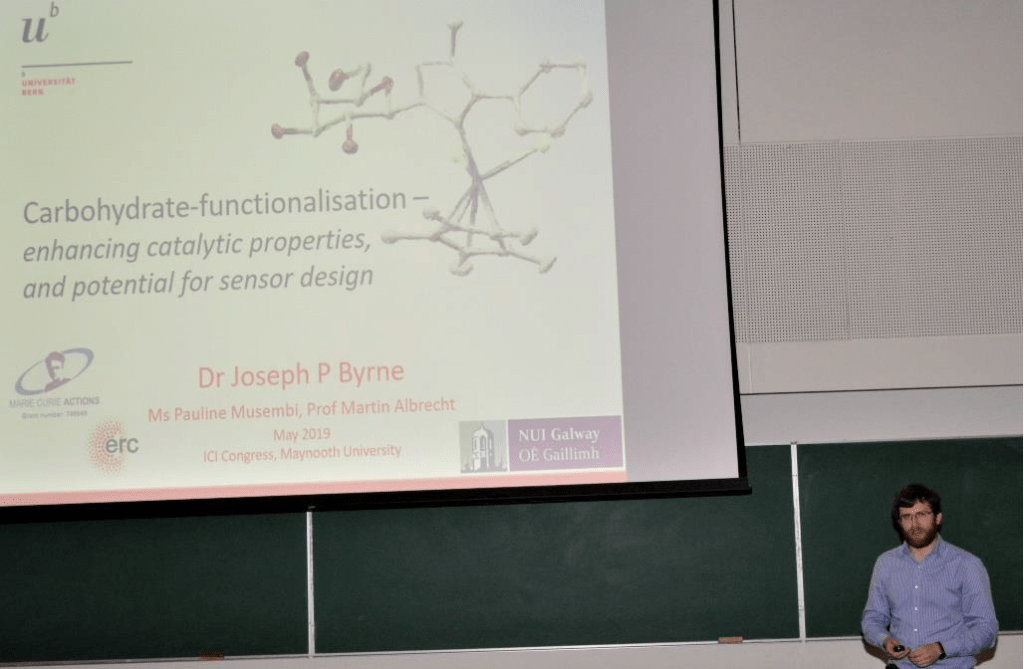
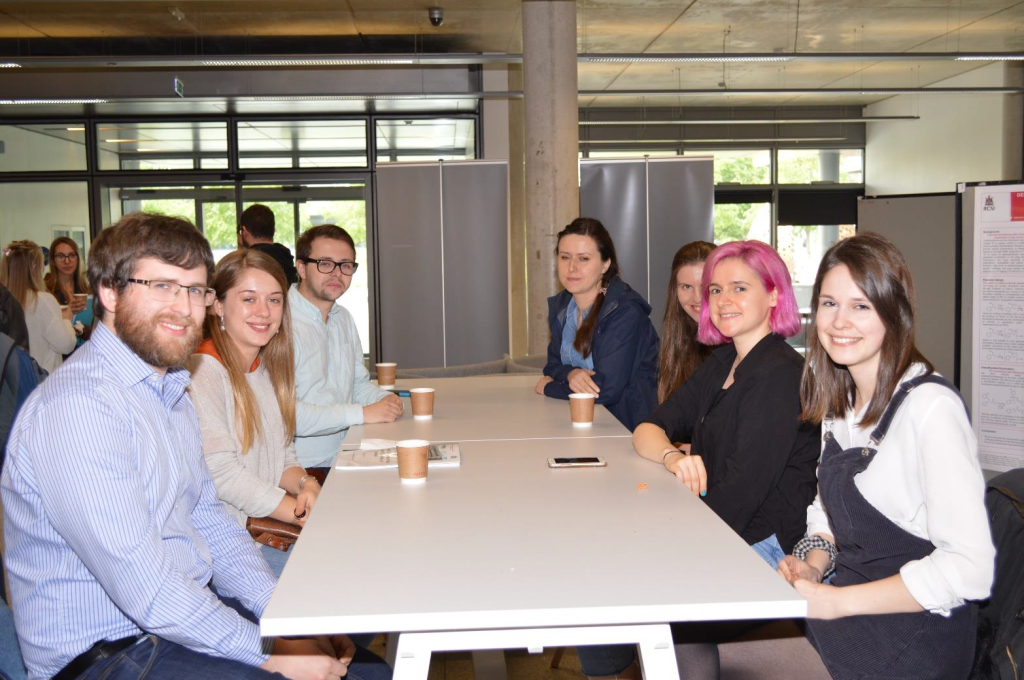
Joe was invited to give a flash presentation at the ICI’s annual congress in Maynooth University, organised by Dr Rob Elmes.
The title of his talk was “Carbohydrate-functionalisation – enhancing catalytic activity and potential for sensor design”, and he spoke about his work from his postdoctoral research in University of Bern, along with preliminary results from his new project in NUI Galway. The Congress was a great opportunity to engage with chemistry researchers from around Ireland, including old colleagues.
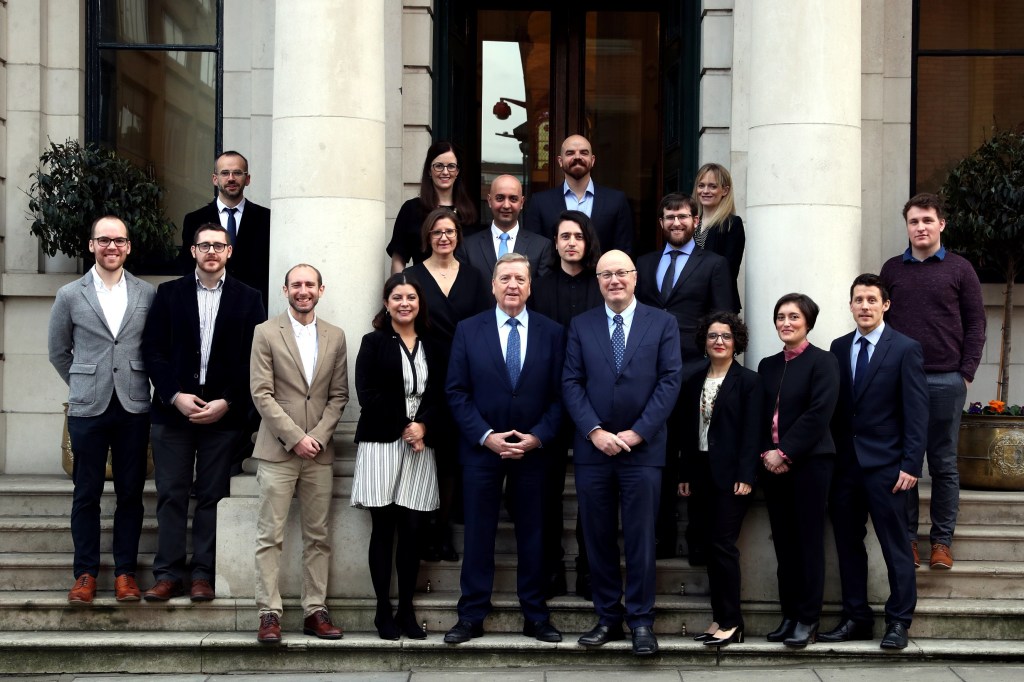
Joe, pictured with James Lawless TD (Fianna Fáil Science and Technology Spokesperson) and Minister Pat Breen TD (Minister of State with special responsibility for Trade, Employment, Business, EU Digital Single Market and Data Protection) outside the Irish Parliament
Joe was awarded a Starting Investigator Research Grant (SIRG) by Science Foundation Ireland at a ceremony today with Minister Pat Breen. This SIRG award will allow him to begin a programme of independent research in NUI Galway in the coming months and begin to build his own research group.
The new research will develop novel devices that will indicate the presence of specific bacteria through colour changes (modulating luminescence), using interactions of their proteins with sugar-based chemical compounds on the surface of newly-designed materials. This will provide a convenient visual strategy to identify disease-causing bacteria. 3D-Printing will be used to create these compact diagnostic devices, which will benefit patient outcomes and quality of life.
“it’s about launching the careers of very bright, young scientists in Ireland”, and indeed it’s a very important programme to allow people like me to return home and start independent research.
Speaking about the planned research, Joe said:
I got interested in fluorescent sensor materials and the chemistry of sugars during my PhD research in Trinity College Dublin with Prof Gunnlaugsson (Irish Research Council Scholarship, 2010-15). Over the last few years in University of Bern, Switzerland, I have been further exploring the role of sugars in catalysis as part of my Marie Curie Fellowship with Prof Albrecht (European Commission H2020, 2017-19). I also gained experience in studying sugar-protein interactions in University of Nottingham, during a 3-month placement there. These interactions are very relevant to a lot of diseases. My new project aims to bring together the skills I have learned through my research training to address practical problems that affect people’s’ lives.
Repro Free: Dublin, 15th January 2019 – Minister for Trade, Employment, Business, EU Digital Single Market and Data Protection, Pat Breen, T.D., today launched Science Foundation Ireland’s Plan for 2019 and announced a research investment of €10.8 million in funding for 20 projects in the areas of health, energy, environment, materials and technology. He is pictured with Prof Mark Ferguson, Director General of Science Foundation Ireland and SFI Starting Investigator Research Grant (SIRG) Awardees. The projects, which will be funded for four years, will support 20 researchers and a further 20 PhD students. (Picture Jason Clarke)
By providing a new methodology for rapid diagnosis of bacterial infection, this work will facilitate quicker decision-making on targeted medical treatment strategies for patients. In Ireland this would be particularly valuable for rapid diagnosis of Pseudomonas aeruginosa infections, a significant risk factor for cystic fibrosis patients (as well as others with compromised immune systems). More generally, helping clinicians avoid the use of broad-spectrum antibiotics would help combat the global challenge of increased antibiotic resistance. This new technology could also be deployed in other scenarios such as detecting bacterial contamination of water supplies.
This award allows me to return to Ireland and make a contribution to Irish society through scientific research, building upon my experience abroad (in Switzerland and the UK). The Starting Investigator Research Grant scheme has given me a fantastic opportunity to begin my independent research programme at a relatively young age in NUI Galway School of Chemistry, and also to work closely with the CÚRAM SFI Centre for Medical Device Research, a hub of expertise in this sector.
The grant also funds recruitment of a PhD student to be part of this interdisciplinary research programme. Interested parties are welcome to get in touch: Contact Joe.
It’s always nice to have an opportunity to see behind the curtain, and all the better if you feel like you’re doing it for a good reason. I was fortunate enough to be invited to join the delegation of Irish parliamentarian James Lawless TD on a fact-finding mission to CERN, the particle physics research centre which straddles the Swiss-French border in a way that is a metaphor for how it brings countries together.
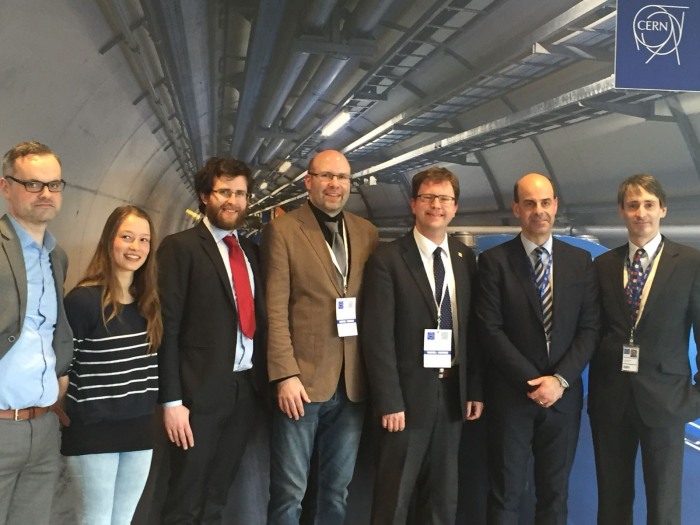
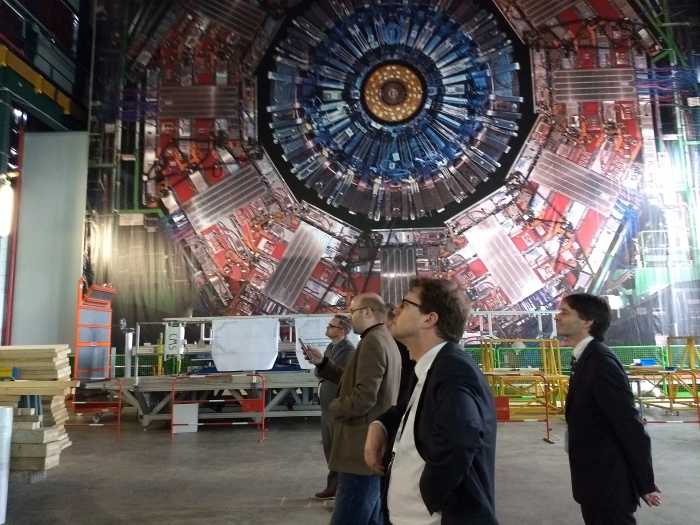
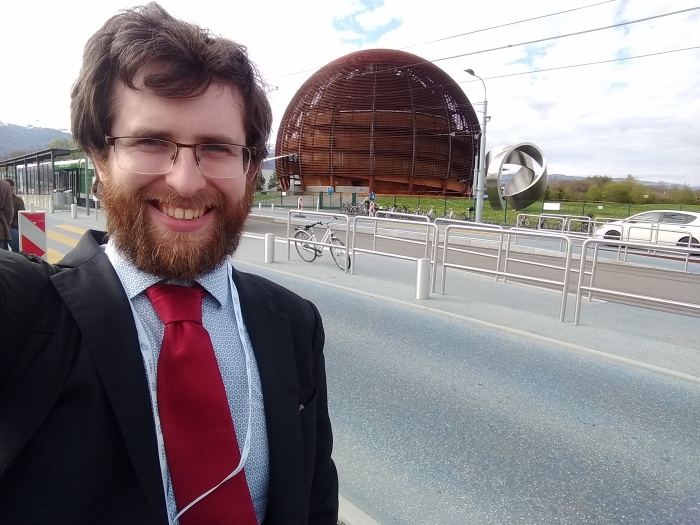
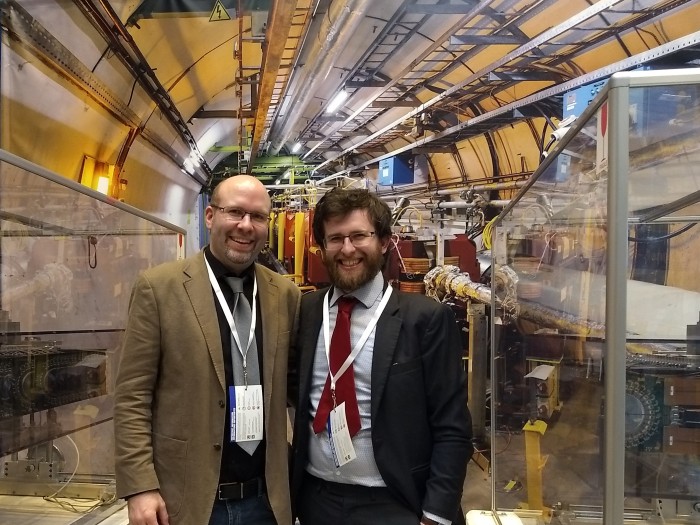
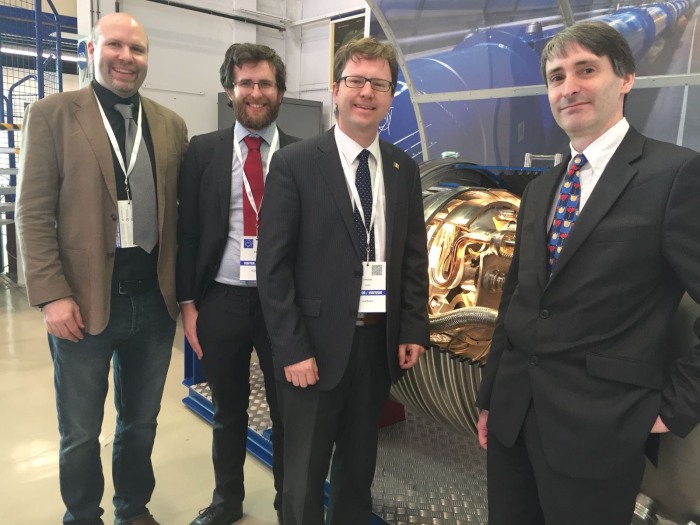
The delegation and some Irish-linked scientists with CERN’s Professor Emmanuel TsesmelisAt CMS, being given the tourMe outside CERN’s main entranceAt LHCbA decommissioned part of the LHC outside in the Swiss countrysideThe delegation being shown a model of an LHC segment in the factoryInformal meeting with the Irish Ambassador in Geneva
Deputy Lawless, Prof Ronan Nulty, Dr Kevin Byrne (both of UCD, Dublin; School of Physics and School of Medicine, respectively), and myself visited the facility and met with leaders and scientists who make it work. The aim of the trip was for CERN to put the case for Irish membership of the body to us, for us to see what benefits would come to the country via participation in the many exciting ground-breaking projects happening, and for Deputy Lawless, as opposition Science and Technology spokesperson on to bring this back to the relevant Oireachtas committees and lobby for Ireland making room in its 2019 budget for CERN membership.
It was wonderful to tour the sprawling campus of rolling fields which lie no less than 50 metres above the Large Hadron Collider and visit the various experiments set up along its 26.7-km circumference. At ALICE, CMS and LHCb (‘b’ for ‘beauty’, a flavour of quark) we met scientists, enthusiastic to talk about their work in everything from fundamental particle physics, to medicine and data processing. I was particularly interested by some work at ISOLDE using radioactive lanthanide isotopes in medical applications in hospitals near the collider. It was noted that while a few of the staff were Irish, in almost every case they also held another passport, because as a non-member state, our citizens do not have the same access to employment in this project as those from the 22 member states.
What most surprised me, as we looked at Irish-made semiconductors in action, and visited the factory where they design and assemble particle-accelerator parts, was that, while Irish people do make a contribution here, it’s often relying on loopholes or having a unique product that no one else can offer. Membership, however, would ensure us access on an equal footing to all other partners. Importantly this would mean returns to the Irish economy in every sector, allowing Irish firms to tender for contracts in construction, cleaning, catering, office supplies etc. in addition to the obvious high-tech and engineering opportunities. Big optimistic scientific exploration has positive knock-on effects throughout society.
One of the most obvious examples of unexpected by-products of investing in fundamental research is the very technology by which you are reading this post now. The World Wide Web was invented at CERN by Tim Berners-Lee. We were able to visit the office where this revolutionary technology came to life, almost as an afterthought, to share information from this worldwide collaborative research. And even if you don’t think quarks and neutrinos effect your life (they do!), at least the Web is tangible evidence that clever people allowed to create and explore together can do great things!
Update October 2023: In the Budget this year, the Irish government included funding for Ireland to join CERN!




 Byrne Research Group