Rosy graduates!

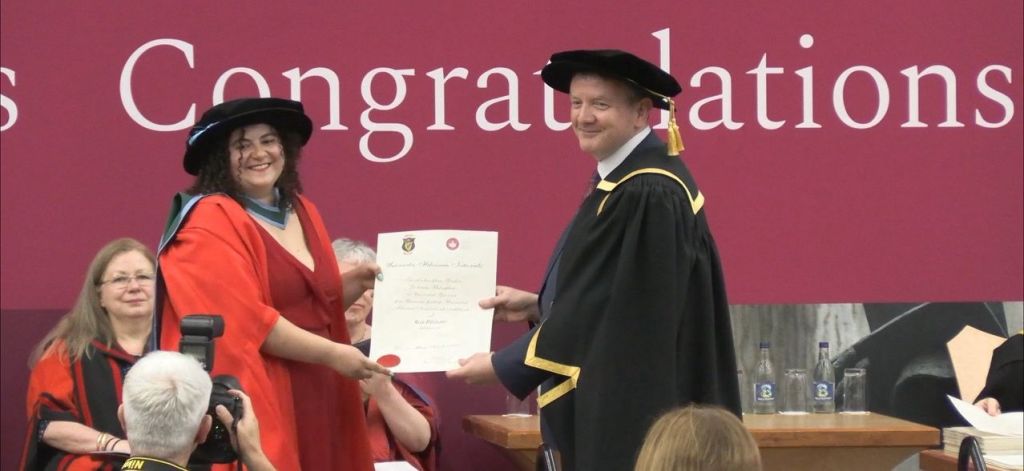
Congratulation to Dr Rosy Polisicchio on her graduation from University of Galway today! Rosy’s thesis was titled “Lanthanide-functionalised vitamin B12 probes for targeted tumour bio-imaging: from rational design to biological evaluation” and her primary supervisor was Dr Luca Ronconi. Joe was her secondary supervisor, lending his expertise on lanthanide chemistry. Rosy was supported by a Hardiman Scholarship and later won an IRC Government of Ireland Postgraduate Scholarship. She was also active in outreach during her PhD. Rosy has already started as an R&D Scientific Communication Advisor at Unilever in the UK. We wish Rosy every success in her future career!

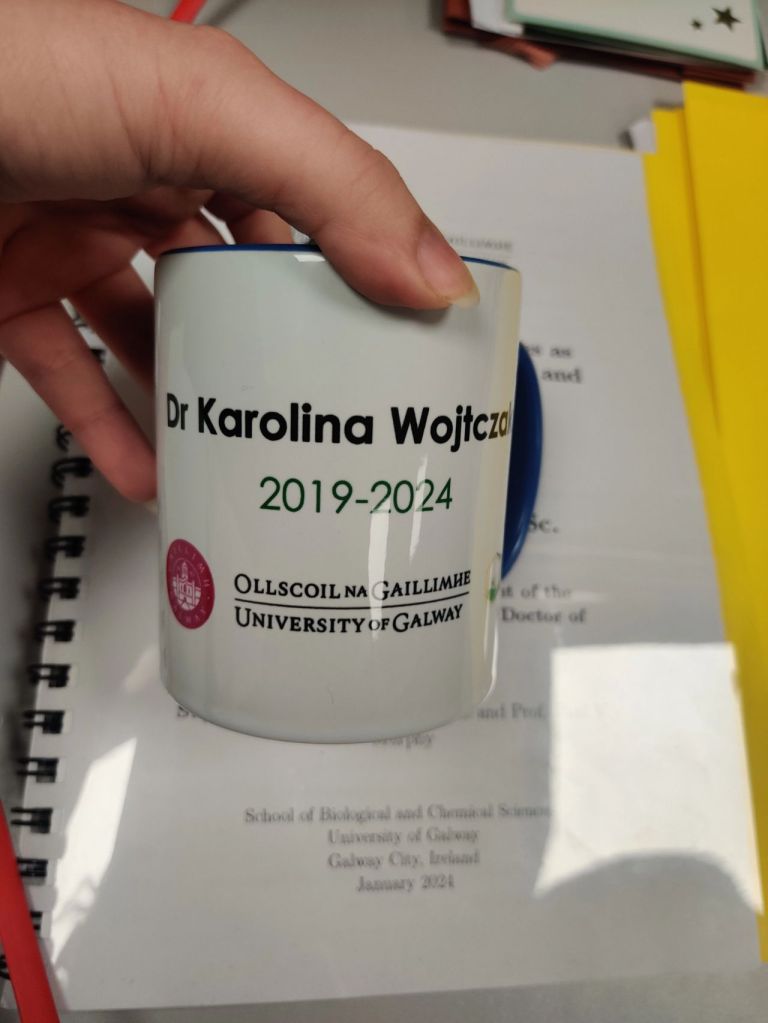
Karolina defends her PhD thesis

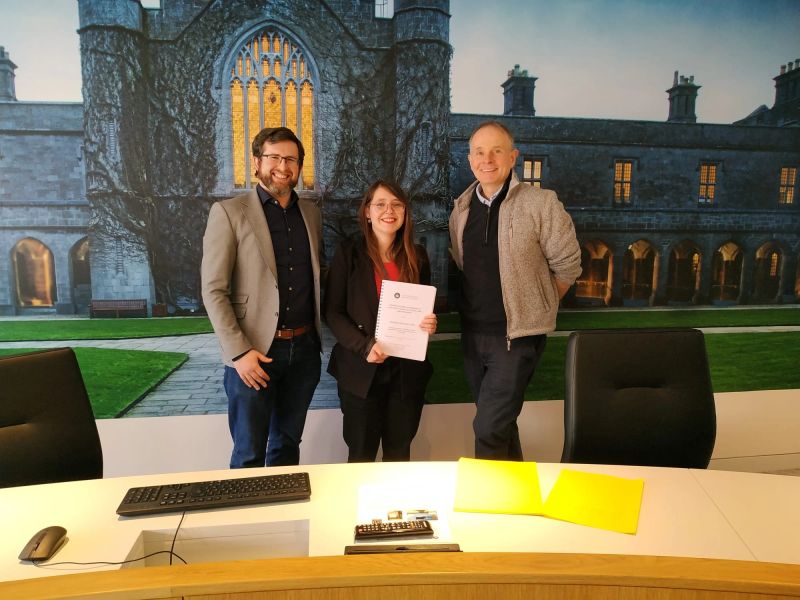
Very proud of my very first PhD student Karolina Wojtczak who successfully defended her thesis last Thursday. A lot of hard work has paid off and she has left the group lots of interesting starting points for future projects (in addition to a few more imminent publications). Her thesis was titled “Metal-based glycoconjugates as molecular sensors for lectins and anti-adhesives”.

Karol was an absolute pleasure to have in my lab and I wish her all the best with her bright future. I’m sure she will achieve great things. Congratulations!

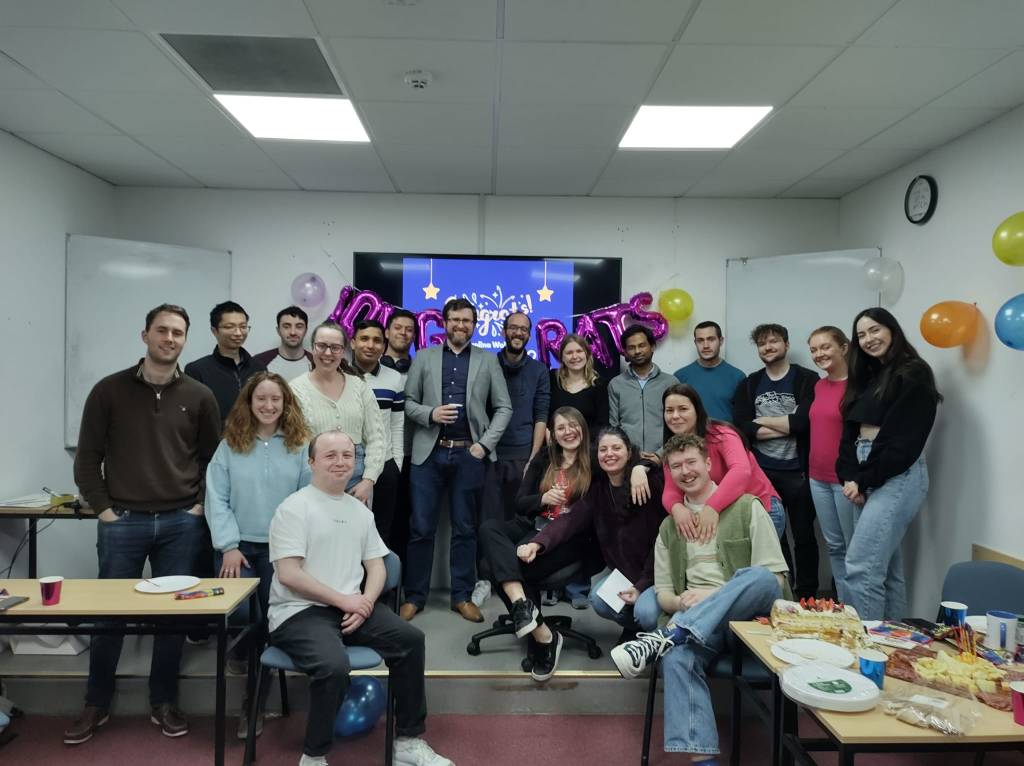
A great celebration was had in Galway to mark the occasion.

Thanks to Research Ireland (formerly SFI) (18/SIRG/5501) for financial support and Paul Murphy for co-supervising her, particularly after I moved to UCD last year.

Karol has already started a position as a Development Chemist in Sterling Pharma Solutions.

ChemComm: Terbium-based lectin sensors

Congratulations to Karolina on her first article published in Chemical Communications. The article has been included in the HOT Articles 2023 Collection as well as a themed collection on Chemosensors and Molecular Logic (related to last year’s MSMLG Conference). The work was considered exciting by the editors and so was featured on the Front Cover of the journal issue.

We describe glycoconjugate terbium(III) complexes, which are able to detect carbohydrate-binding proteins in aqueous buffer solution. When the carbohydrate motif on the complex matches the target of the protein, an enhancement in lanthanide luminescence is observed. The bacterial lectin LecA (from P. aeruginosa) is one of the detected proteins.

Sensing behaviour of complexes Tb.3. See article for full description of results

This work was funded by Science Foundation Ireland (18/SIRG/5501), with support from a 4th year project student, and our collaborators in TU Dublin (Gordon Cooke) and University of Saarland (Alexander Titz, HZI/HIPS). The interdisciplinary work includes synthesis of new sensor molecules, biological assessment and examination of their lectin binding affinity. We believe this work could lead to the development of tools which could use detection of characteristic proteins from pathogens as a means for diagnosis, and hope to follow up on this in future publications.