Welcome to Rosa, Finn and Hubert

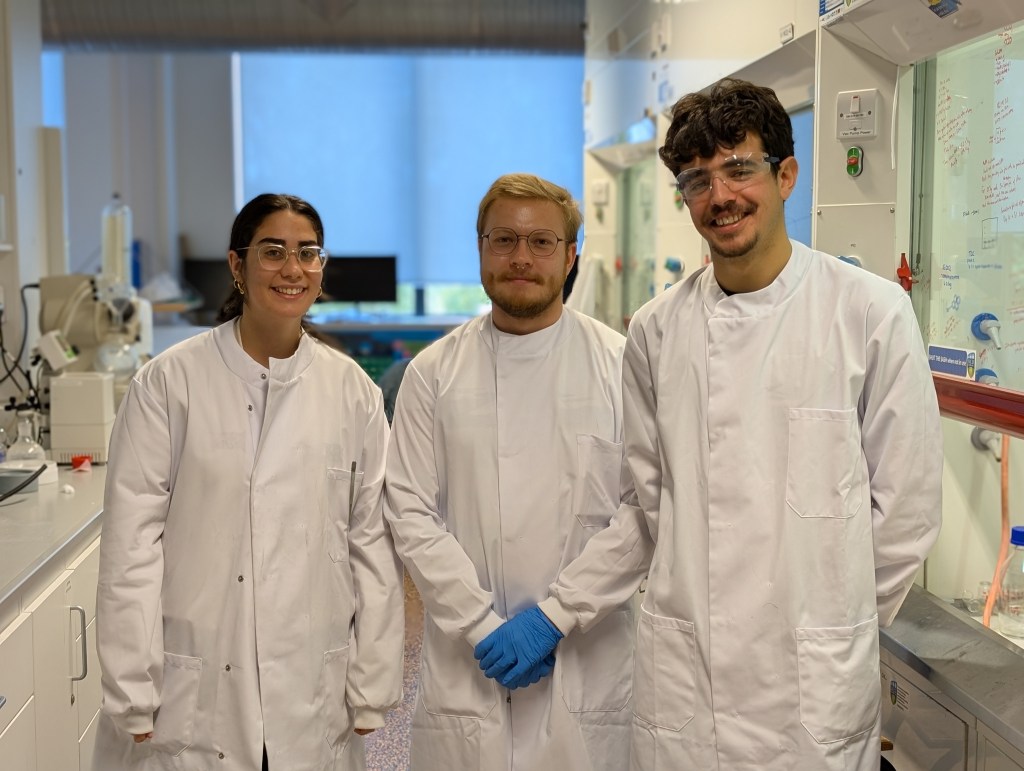
This Autumn we welcome three new members to the Byrne Research Group. The group, at 6 full-time researchers, is the largest it has been to date! Welcome to Rosa, Finn and Hubert – we wish them every success.

Dr Rosa Fernandez Pison joins us as a postdoctoral researcher on the Link4Lectin project, where she will contribute to the coordination chemistry and organometallic components of the target molecules. She completed her PhD in UCD during the summer in organometallic catalyst development. She previously completed a Research MSc at University of Galway, and an undergraduate degree in her native Sevilla (with year abroad in University of York).

Finn Tlatlik holds an MSci from University of Glasgow in Chemistry with Medicinal Chemistry. His degree included a year of research placements in France as well as a project in Glasgow. He is joining us to complete his PhD with a Sir Walter Hartley Studentship, and will be working on optimising the photophysical properties of lanthanide complexes as lectin sensors.

Hubert Rebow is returning to the group, having secured a Government of Ireland Postgraduate Scholarship. Hubert is a recent graduate of UCD’s Medicinal Chemistry and Chemical Biology BSc programme, and completed a final year project in our lab. His project, developing supramolecular boronic acid-based glycan probes involves collaboration with Dr Aniello Palma and Prof Jeremy Simpson.

Rosy graduates!

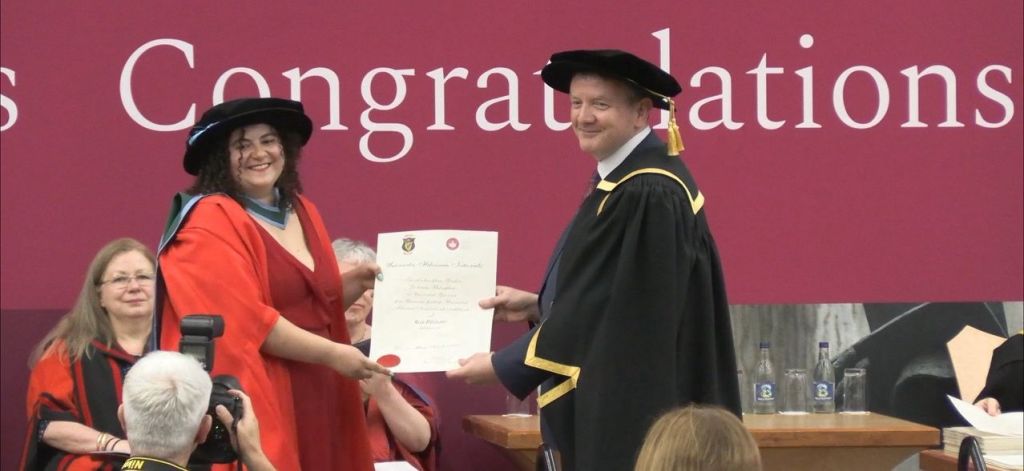
Congratulation to Dr Rosy Polisicchio on her graduation from University of Galway today! Rosy’s thesis was titled “Lanthanide-functionalised vitamin B12 probes for targeted tumour bio-imaging: from rational design to biological evaluation” and her primary supervisor was Dr Luca Ronconi. Joe was her secondary supervisor, lending his expertise on lanthanide chemistry. Rosy was supported by a Hardiman Scholarship and later won an IRC Government of Ireland Postgraduate Scholarship. She was also active in outreach during her PhD. Rosy has already started as an R&D Scientific Communication Advisor at Unilever in the UK. We wish Rosy every success in her future career!

Karolina defends her PhD thesis

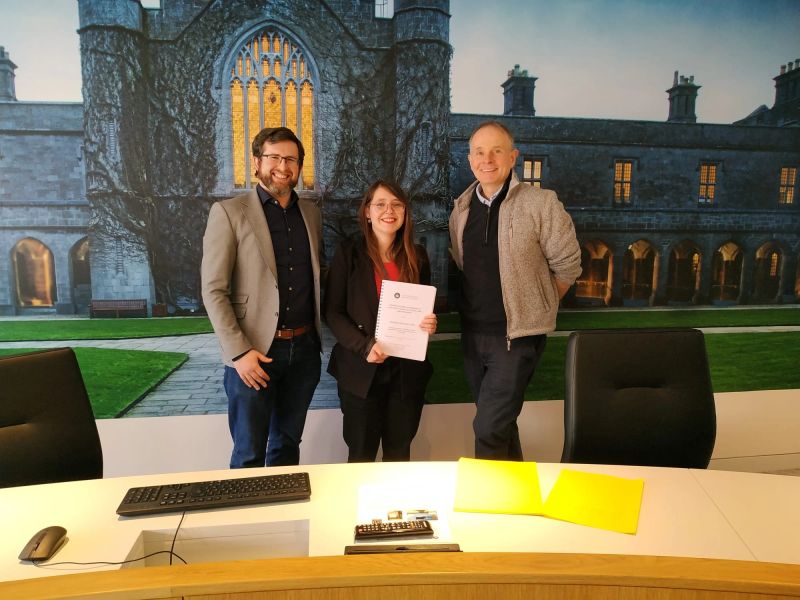
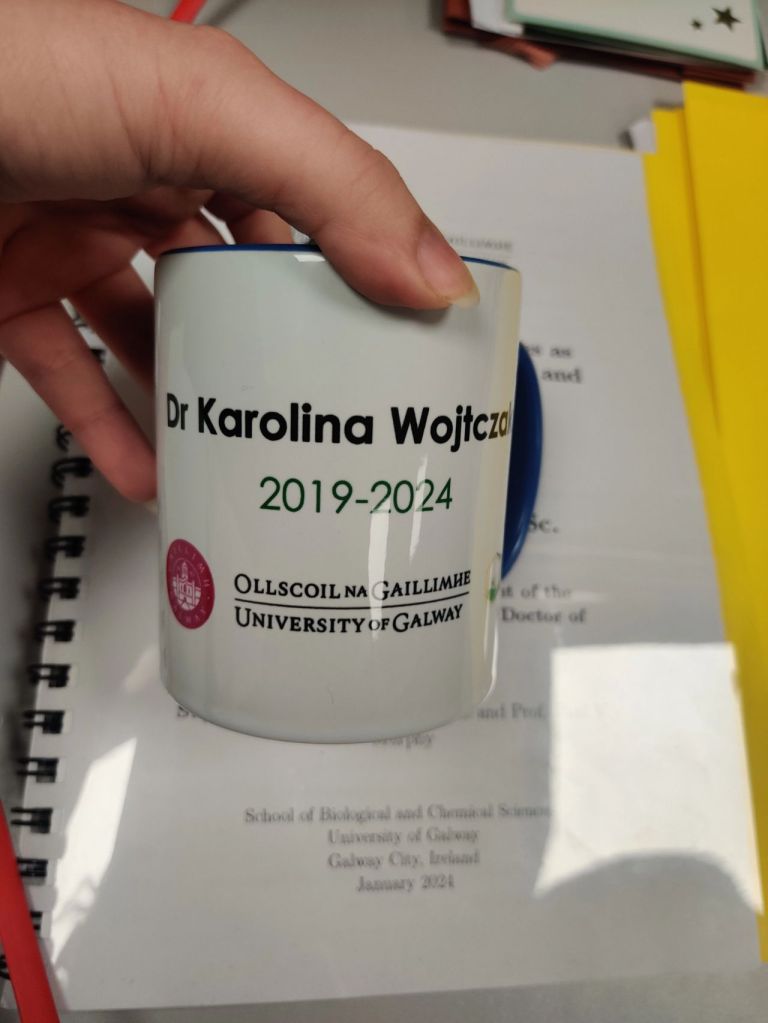
Very proud of my very first PhD student Karolina Wojtczak who successfully defended her thesis last Thursday. A lot of hard work has paid off and she has left the group lots of interesting starting points for future projects (in addition to a few more imminent publications). Her thesis was titled “Metal-based glycoconjugates as molecular sensors for lectins and anti-adhesives”.

Karol was an absolute pleasure to have in my lab and I wish her all the best with her bright future. I’m sure she will achieve great things. Congratulations!

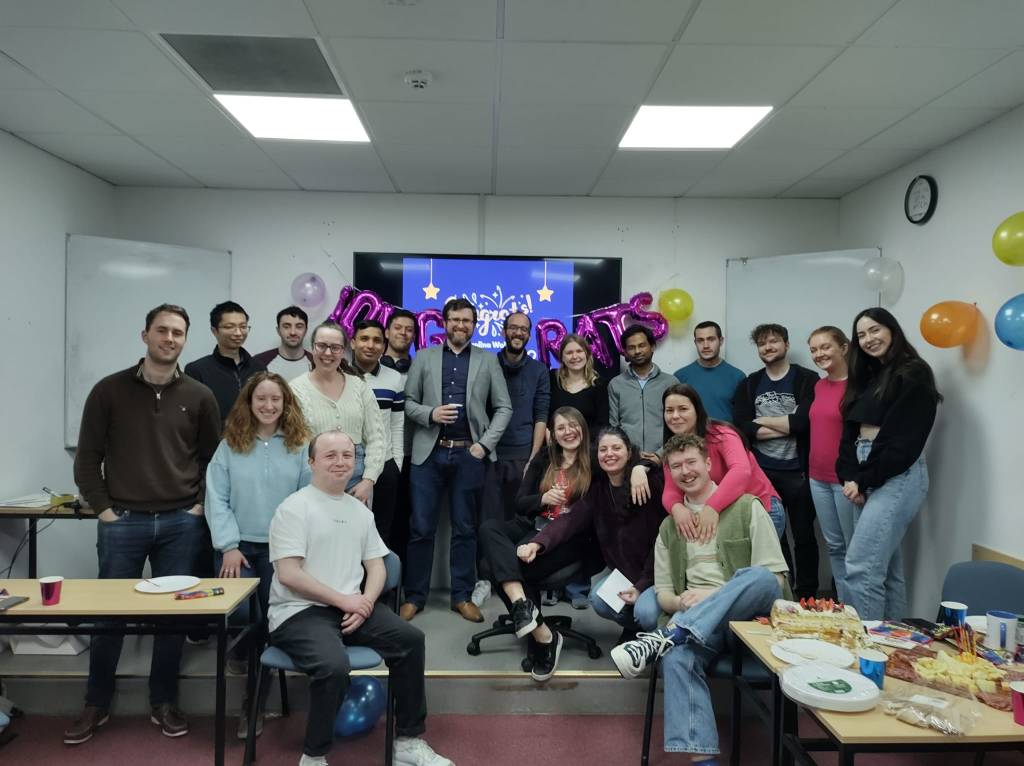
A great celebration was had in Galway to mark the occasion.

Thanks to Research Ireland (formerly SFI) (18/SIRG/5501) for financial support and Paul Murphy for co-supervising her, particularly after I moved to UCD last year.

Karol has already started a position as a Development Chemist in Sterling Pharma Solutions.

Rosy wins a prize in Threesis Contest

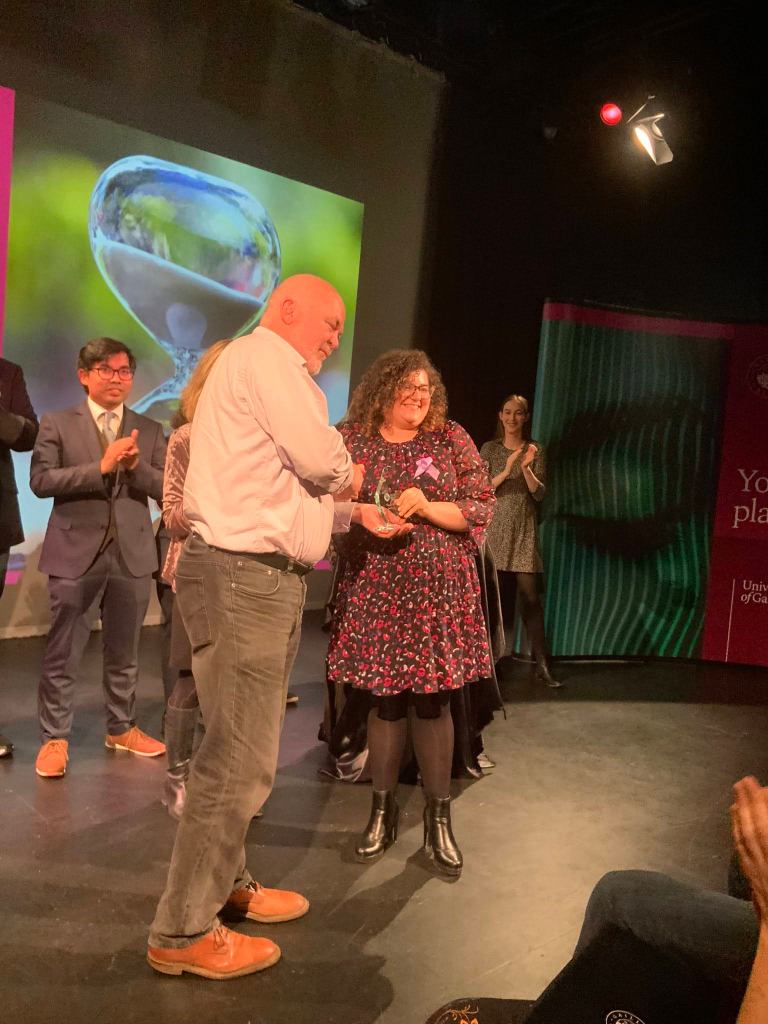
Rosy won second place in the 2022 Threesis Contest, where researchers present their thesis to a lay audience in 3 slides and 3 minutes. Dozens of PhD students from every school in University of Galway competed in this long-running Science Communication challenge this year, including Rosy and Karolina. Rosy’s talk, titled “Tumours play hide and seek; how do we win?” was received very well by the judges and audience and was a well-deserved prize winner. Well done, Rosy. You can watch a video of her contribution below.

Rosy is a PhD student in Luca Ronconi’s group at University of Galway, co-supervised by Joe since 2021. Her research is into lanthanide complexes conjugated to targeting biomolecules. Her research is funded by the Irish Research Council, and previously by a Hardiman Scholarship.

Joe awarded IRC Laureate Starting Award

Minister Simon Harris recently announced the Irish Research Council’s €24m investment in fundamental research through the Laureate Awards, including a new project, designed by Joe: Link4Lectin – “Mechanically linked molecular strategy for novel antimicrobial agents, pairing bioactive metal complexes with targeting of the carbohydrate-binding proteins of bacteria”. €399,000 have been committed to this project, in which Joe will lead a team of researchers in discovery of new modular antimicrobial tools. This award will allow Joe to establish independence and expand the group as he moves from University of Galway to UCD.

Announcing the awards, Minister Harris said:

“I am delighted to announce the winners of the second round of the Irish Research Council’s Starting and Consolidator Laureate Awards Programme and I congratulate each of the awardees. It is a pleasure to also welcome the Ukrainian researcher who came to Ireland from the war in Ukraine, and who will collaborate on one of the newly funded projects through the IRC’s innovative Ukrainian Researchers Scheme.

These talented researchers will no doubt contribute hugely towards the world-class excellence that is the bedrock of our research system in Ireland, pushing the boundaries of research knowledge and finding new discoveries that deepen our understanding of the world around us, by looking to the past, questioning the present, and unlocking our future potential.”

Also commenting, Dr Louise Callinan, Director of the Irish Research Council, said: 

“The 48 researchers who will receive funding under the Starting and Consolidator Laureate Awards Programme have the potential to make ground-breaking advances in their respective fields and to bolster Ireland’s competitiveness in European research funding.

This is the second round of Laureate funding and many of the first-round awardees will be completing their research next year. It is testament to the success of the programme that three of the first-round awardees have already gone on to receive European Research Council funding, one as part of Ireland’s first ERC Synergy grant worth €10 million.

The winning projects were awarded on the basis solely of excellence, and applications were assessed through a rigorous and independent international peer-review process.

Keep an eye on our Vacancies page for recruitment as part of this award.

Joe interviewed on Galway Bay FM about SugarCoat

Joe and his colleagues in Queens University Belfast and CÚRAM were recently awarded a North South Research Programme grant to carry out the SugarCoat project, developing smart coatings for medical devices to protect from bacterial infections. Joe was interviewed by Keith Finnegan on Galway Bay FM this morning about the promise of this project in the context of antimicrobial resistance. Listen at the links below.

Press release: NUI Galway (“Researchers aim to give new layer of protection to medical devices”).
Radio Interview on Galway Bay FM: podcast (0:29:00-0:38:50); article summary; [audio file]
Coverage in Connacht Tribune, Daily Mail (UK), Irish Medical Times, and Galway Daily; SFI Research News

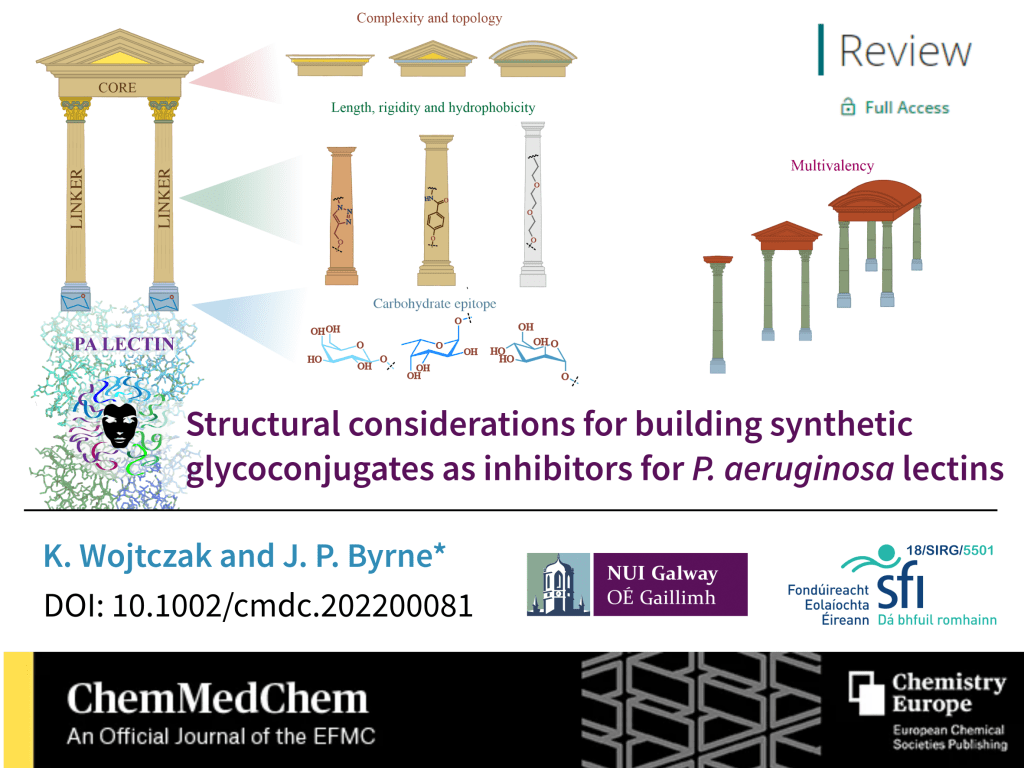
Article on lectin-inhibitors published in ChemMedChem

Karolina and Joe’s review article on “Structural considerations for building synthetic glycoconjugates as inhibitors for Pseudomonas aeruginosa lectins” has been published by ChemMedChem. The article is available here: https://doi.org/10.1002/cmdc.202200081

Pseudomonas aeruginosa is a pathogenic bacterium, responsible for a large portion of nosocomial infections globally and designated as critical priority by the World Health Organisation. Its characteristic carbohydrate-binding proteins LecA and LecB, which play a role in biofilm-formation and lung-infection, can be targeted by glycoconjugates. In the review, we present the wide range of inhibitors for these proteins (136 references), highlighting structural features and which impact binding affinity and/or therapeutic effects, including carbohydrate selection; linker length and rigidity; and scaffold topology, particularly for multivalent candidates. We also discuss emerging therapeutic strategies, which build on targeting of LecA and LecB, such as anti-biofilm activity, anti-adhesion and drug-delivery, with promising prospects for medicinal chemistry.

This article would be a good entry-point for any researchers considering tackling P. aeruginosa as a target organism, particularly if they want to build lectin-targeting ligands building on the existing consensus in the field on the best structural features to ensure high lectin affinity.

Thanks to Science Foundation Ireland for funding this research.

Shared Island Funding awarded to medical device coating project

Researchers at NUI Galway and Queen’s University Belfast are investigating how attaching sugar molecules to plastics could help prevent and detect bacterial infections in medical devices (e.g. urinary catheters, endotracheal tubes). Certain sugar molecules can interact selectively with bacterial proteins, and the researchers plan to harness these interaction to make fluorescent materials which glow at first, darkening when they become compromised by bacteria, allowing clinicians to react faster to potential infections before they become a serious risk to patient health. Coating medical devices with these plastics would result in “smart” devices, giving doctors and nurses tools to reduce risks of infection, bring down healthcare costs and decrease the need for antibiotic use in hospitals.

Early-career researchers Dr Joseph Byrne (NUIG) and Dr Matthew Wylie (QUB) have been awarded €193,000 to spearhead the SUGARCOAT project, developing coatings for medical devices using polymers containing sugar molecules, with the support of senior colleagues Prof Abhay Pandit, Director of CÚRAM Centre for Medical Device Research, and Prof Colin McCoy, Head of School of Pharmacy in QUB. The project will bring together complementary expertise from chemistry, pharmaceutical materials science and medical device research to tackle the growing  challenge of hospital-acquired infections.

This project is part of the North-South Research Programme, announced by An Taoiseach Micheál Martin TD on 2 March 2022, as part of the Shared Island Fund. [Government Press Release]

Hospital-acquired infections are a major health concern for patients, and also incur significant expense to health systems across the island of Ireland, requiring longer hospital stays and antibiotic use. Patients requiring medical devices are at greater risk, often taking medicines that suppress their immune system making their bodies more susceptible to infection. Infections by dangerous bacteria, such as E. coli and P. aeruginosa have risen significantly in recent years, with medical device-associated infections account for up to half of healthcare-associated infections. Immunocompromised people and people with cystic fibrosis (CF) are particularly affected; Ireland, North and South have among the highest per capita CF incidence.

The rise of antimicrobial-resistant bacteria is an urgent problem highlighted by the World Health Organisation in recent years, decreasing the effectiveness of existing antiobiotics. It is estimated that across EU/EEA countries, 33,000 deaths per year in EU/EEA countries are associated with antimicrobial resistance, costing more than €1bn to health services. This project hopes to minimise the impact of this challenge by producing innovative device coatings, which will prevent or detect bacterial build-up on widely-used medical devices before they lead to infection in a patient.

Speaking about the funding award, Dr Joseph Byrne, Honorary Research Lecturer in the School of Biological and Chemical Sciences, NUI Galway, said

“Prevention of bacterial infections is key to fighting the challenge of antimicrobial resistance and if this isn’t possible, then early detection through innovative sensing materials, would allow devices to be removed and replaced by healthcare professionals before infection becomes a more serious risk to patient health. Hospital-acquired bacterial infections are a major issue across the entire island of Ireland, and I’m excited to forge a new and lasting relationship with Matthew, Colin and their team in Belfast to deliver meaningful new tools in fighting this challenge.”

“My work in this area is largely fundamental chemistry research, and this funding is a great opportunity will allow me to partner with more patient-facing researchers and healthcare stakeholders to increase our societal impact. Building all-island collaborations through this Scheme will help us to unlock Ireland’s potential for innovation and cutting-edge science.”

Dr Matthew Wylie, Lecturer in Pharmaceutical Materials Science in Queens University Belfast added:

“We are delighted to receive this funding from the Shared Island Fund. The partnership between NUIG and QUB will not only support two early career researchers but will open up opportunities for collaboration with industry and clinicians in both the North and South of Ireland. Galway is home to a number of major medical device companies. We are excited to have the opportunity to pursue clinical translation of cutting-edge research developed right here in Ireland.

“The team at QUB have vast experience collaborating with medical device companies across the UK and Ireland and working closely with clinicians in Belfast. At the start of the project we will assemble a committee of key stakeholders building a consensus, North and South, to steer development of this innovative sensing technology to address antimicrobial resistance.”

About Shared Island Fund

Last year, €40m was allocated from the Shared Island Fund over five years for the North-South Research programme. This significant development is aimed at supporting the deepening of links between higher education institutions, researchers and research communities on the island of Ireland, delivering all-island approaches to research and innovation.

Announcing the awards, Taoiseach Micheál Martin, said: “These awards will support the Government’s Shared Island vision by bringing researchers from all corners of the island together to work on pioneering projects over the next four years, and is not only strengthening existing relationships, but is fostering new research partnerships.

“I’m particularly impressed by the high level of interest and the calibre of the proposals, and I am confident that these cross-border collaborations will further strengthen the island’s reputation for innovation and research excellence”.

Sixty-two collaborative research projects between academics and institutions in Ireland and in Northern Ireland were awarded a total of €37.3 million under the first funding call from the North-South Research Programme, which is a collaborative scheme funded through the Government’s Shared Island Fund. It is being administered by the Higher Education Authority (HEA) on behalf of the Department of Further and Higher Education, Research, Innovation and Science.

Announcement: https://www.youtube.com/watch?v=eT0sV2TjrAo