Posts

Joe speaks at festive RSC Coordination and Organometallic Discussion Group Christmas Meeting

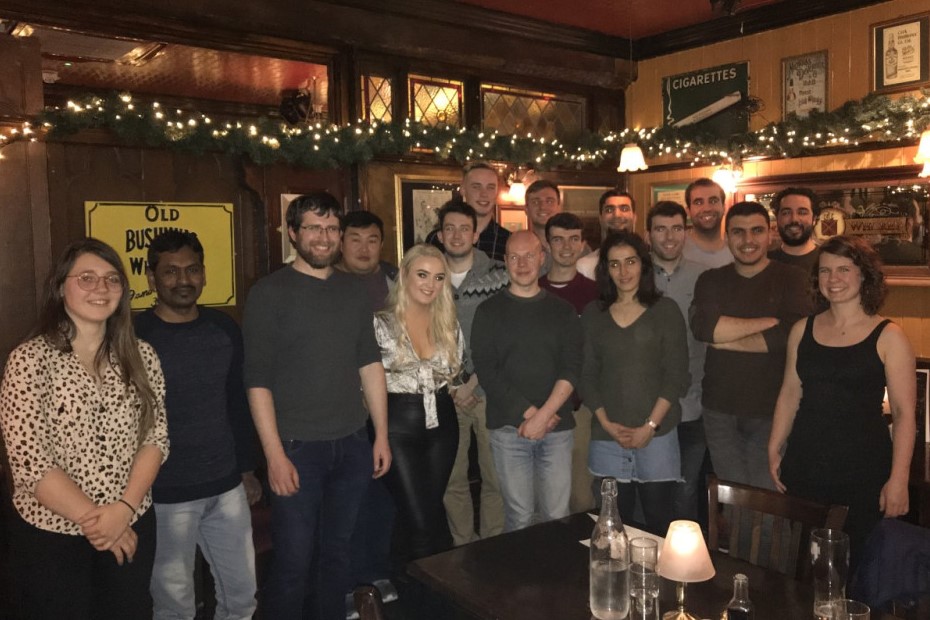
At the annual RSC Coordination and Organometallic Discussion Group Christmas meeting (UCD Dublin), everyone was asked to select an element as the focus of their talk, to celebrate the end of the International Year of the Periodic Table. Joe gave a talk celebrating the versatility of ruthenium complexes. The talk brought together two different project, linked by this transition metal.
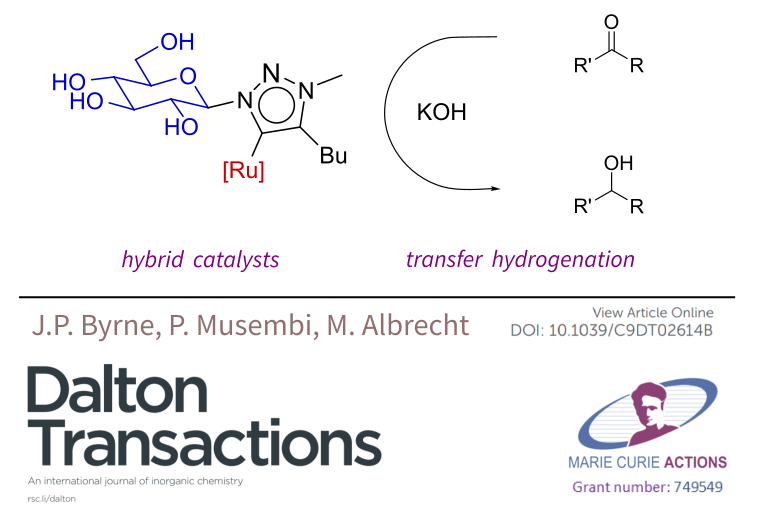
He spoke about the carbohydrate-functionalised Ru-NHC catalysts which were published recently in Dalton Transactions, as well as some Ru(II) coordination complexes (also featuring carbohydrates) which have shown antimicrobial activity (unpublished results, collaboration with Prof Thorri Gunnlaugsson and Dr Ciaran O’Reilly).

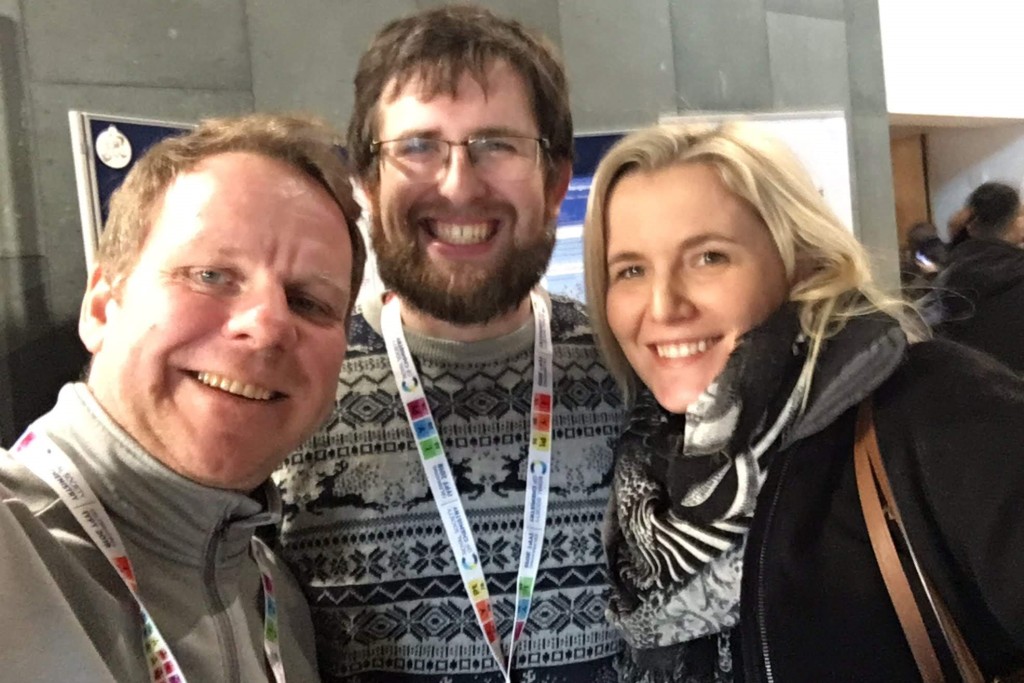
It was a very festive meeting, with inorganic chemists from all over Ireland and the UK in attendance – a great chance to catch up with old friends and new.
Joe gives seminar at Maynooth University

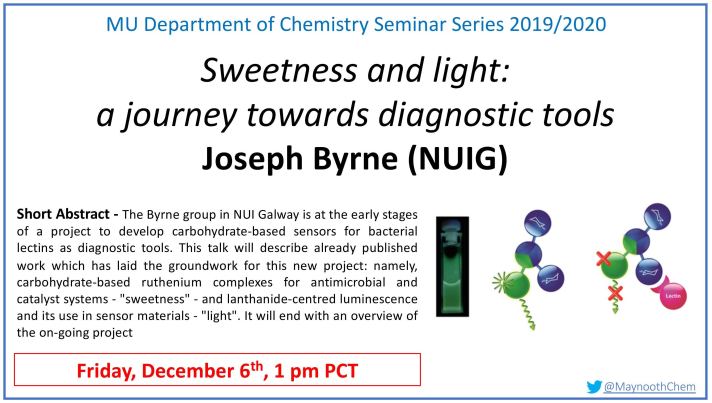
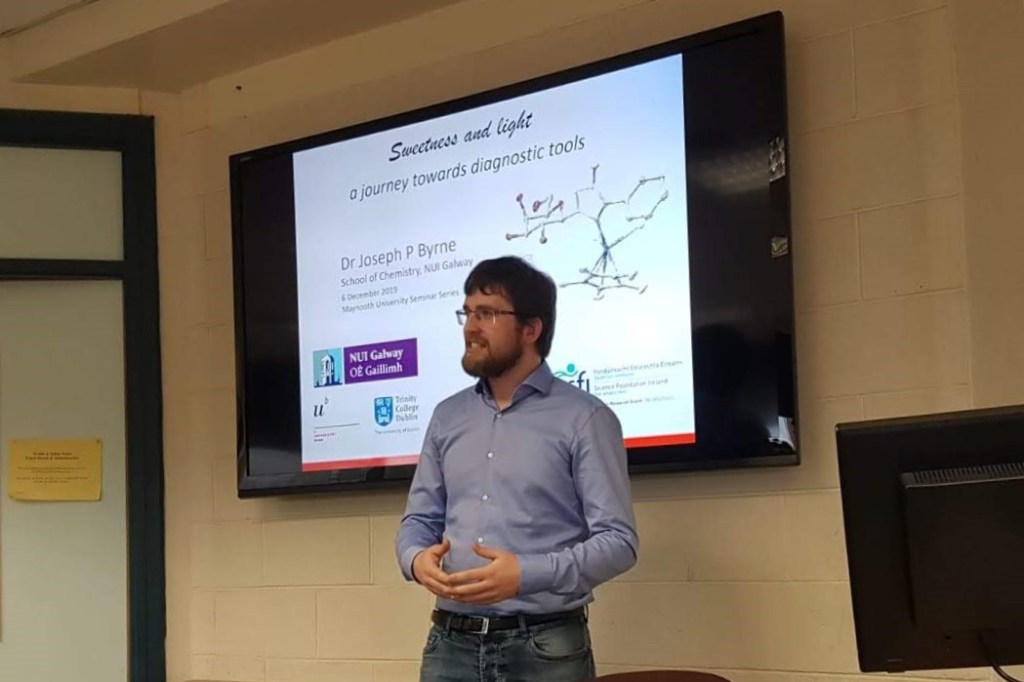
Joe was invited to give a seminar in his alma mater Maynooth University on 6th December 2019. He spoke about his research into luminescence and carbohydrates and how his current project is bringing these together. The presentation was titled: “Sweetness and light: a journey towards diagnostic tools”.

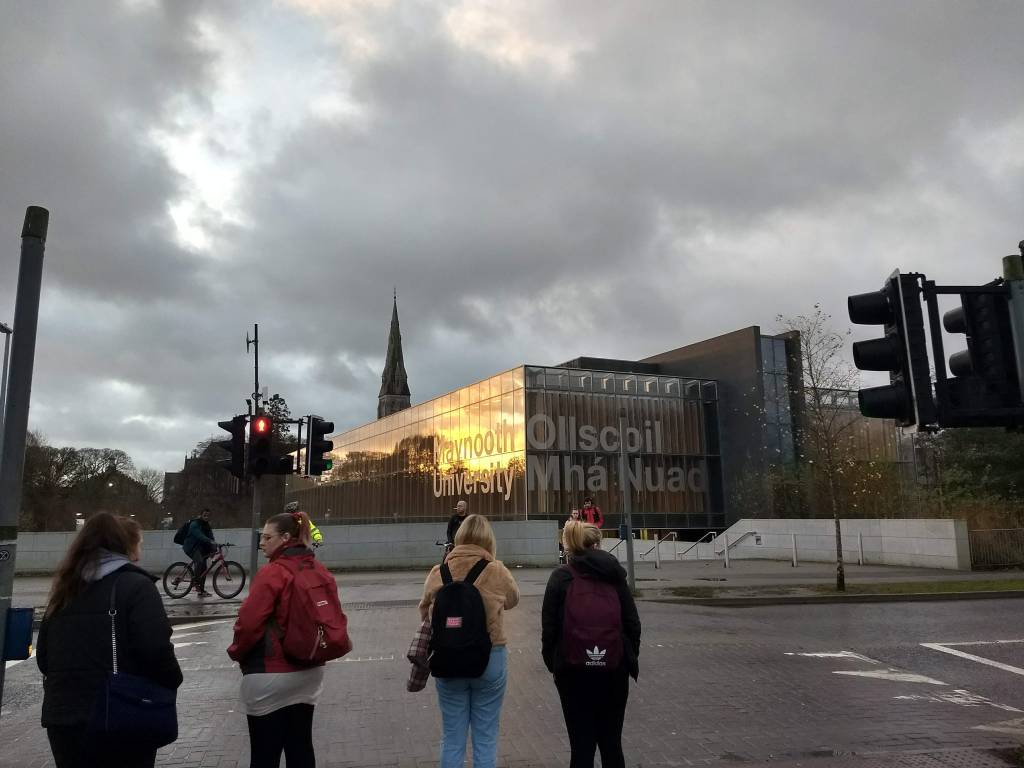
There was some good discussion afterwards with staff and students of the Department of Chemistry, and a lunch with Dr Diego Montagner and Dr Elisa Fadda, to further continue the conversation.

Thanks to Maynooth for their hospitality!

Congratulations to Prof Murphy on his Research Supervisor Award from the University

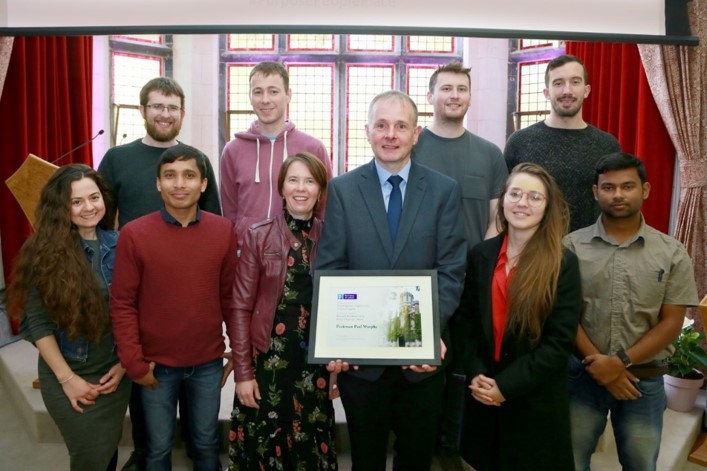
Congratulations to Prof Paul Murphy on his recognition by NUI Galway with a Research Supervision Award, reflecting his commitment to training PhD students and postdocs through the years. Paul is Joe’s SIRG-mentor and co-supervises Karolina’s PhD project. We are very grateful for his support and hosting us in his lab space at NUI Galway. The award is very well deserved!

Prof Paul Murphy along with researchers he currently supervises at the awards ceremony

Dillon Symposium Public Session videos

The Public Session of the Dillon Centenary Symposium is available to view on YouTube. This includes the Dillon Threesis Challenge (young researchers talking about their work for 3 minutes with zero jargon), a chemistry-inspired ballet and historical talk about Prof Dillon.

Selected lectures from the Scientific Session are available as a playlist here.

Not all lectures were broadcast. Consult the programme to see who is currently speaking. The “Public Session” from 17.00 GMT was broadcast.

Update 20/12/2019: More edited videos of the threesis and ballet, filmed from various angles are now available as a playlist here.

Walk for Cystic Fibrosis Ireland

Joe raised funds for Cystic Fibrosis Ireland by taking part in their annual Head2Head walk around Dublin Bay. Our research aims to develop diagnostic tools that could speed up diagnosis of P. aeruginosa infections, a widespread problem for people with CF – it seemed only right to try to raise some funds for organisations supporting people with the disease. Thanks to everyone who donated!

Joe in Sandymount starting his walk. The destination is at the end of the headland just next to his left ear!

Swiss Chemical Society Fall Meeting

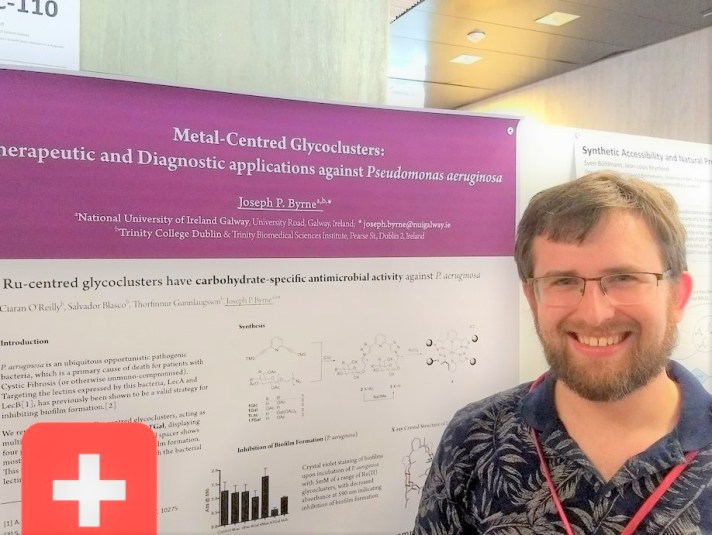
Joe presented a poster at the SCS Fall Meeting in Zurich. The poster described recent work involving metal-centred glycoclusters, tageting carbohydrate-lectin interactions. It was a good opportunity to stay connected with Swiss colleagues from his postdoctoral work in University of Bern, as well as present new research in an international setting.

Afterwards, Joe had some meetings in University of Bern before returning to Galway.

New publication in Dalton Transactions

I’m delighted to finally publish this work, the first of my research carried out during my Marie Curie Fellowship in University of Bern to come out. A lot of hard work by Erasmus student Pauline went into gathering data behind this manuscript where we asked the question – what impact would incorporating carbohydrates into the structure of a Ruthenium(II)-triazolylidene complex have on its ability to convert a ketone to an alcohol via transfer hydrogenation catalysis.

There were challenges in isolating the desired compound, so it had to be generated in situ, but we were able to assess the activity, and the results were interesting, and can be found in detail here in Dalton Transactions.

To summarise the conclusions: The carbohydrate functionality does impact catalytic activity (transfer hydrogenation of ketones). In complexes with the glucose directly triazolylidene-bound,  turnover rates were substantially higher when compared to more remote carbohydrate functionalisation (i.e. with an ethylene spacer). Both new complexes, however, have reduced activity compared to  unfunctionalised carbene complexes. Insight was also gained into the nature of the catalytic cycle through a substrate scope analysis.