Joe has been awarded a Frontiers for the Future Project award worth €791,010 to support new research into functional materials to prevent bacterial infection. Leveraging bioinorganic and carbohydrate chemistry concepts into a new approach. This funding will allow the Byrne Research Group to expand and explore new areas of research. Recruitment for new PhD students is already underway, along with additional advanced equipment to facilitate the research. More details are in the press release from UCD Chemistry below.
Joe spoke about the project and the funding at the end of KFM’s Kildare Today programme on 21/05/202: on-air interview (0:31:50-end, [audio clip]). An article also appeared on the project in the Kildare Nationalist.
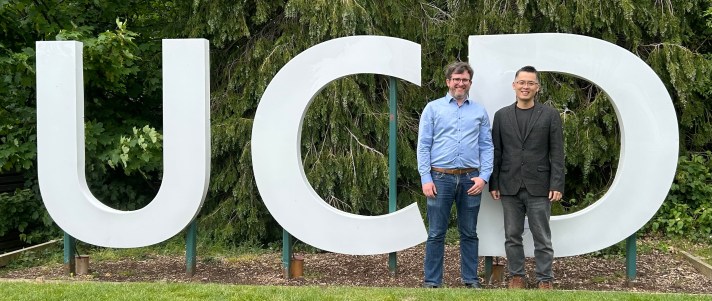
The UCD School of Chemistry has achieved a major double-win in the latest Research Ireland Frontiers for the Future funding round. Dr. Charles Loh (Awards Stream) and Dr. Joseph Byrne (Projects Stream) have been awarded a combined €2.7 million to lead two visionary projects: LIGHT4CARB and GlycoMetalGuard.
This funding milestone cements UCD’s standing as a premier European hub for fundamental chemistry, bridging the gap between curiosity-driven science and global challenges in sustainability and human health. Furthermore, this achievement is a significant testament to UCD’s leading reputation at the global forefront of innovative carbohydrate chemistry.
The Frontiers for the Future Programme—a flagship initiative of the newly established Research Ireland—specifically targets ambitious, “high-risk, high-reward” research. It is designed to empower Irish scientists to challenge existing boundaries of knowledge, delivering breakthroughs with the potential for profound societal and economic impact.
LIGHT4CARB: Led by Dr. Charles Loh, the LIGHT4CARB project focuses on the emerging field of photoredox catalysis. The team aims to harness the power of inexpensive, widely available visible light to drive complex chemical reactions. By using light as a primary energy source, the project enables the sustainable and mild synthesis of essential biomolecules, such as non-natural sugars, while drastically reducing chemical waste and energy consumption. These synthetic sugars are critical “building blocks” for a wide range of pharmaceuticals. LIGHT4CARB will hence accelerate the drug discovery pipeline, ensuring that the next generation of high-value medicines is developed through greener, more efficient chemical processes.
“I am delighted that Research Ireland has recognised LIGHT4CARB as a bold blueprint for advancing sustainable photoredox chemistry to access valuable sugar building blocks,” says Dr. Loh. “This award underscores Research Ireland’s commitment to high-quality fundamental research and positions UCD as a leading hub for transformative visible-light-driven synthesis. I am immensely excited to embark on this new research chapter, pushing the frontiers of what is possible using modern light-driven organic synthesis, and to nurture younger generations of chemists with state-of-the-art synthetic strategies.”
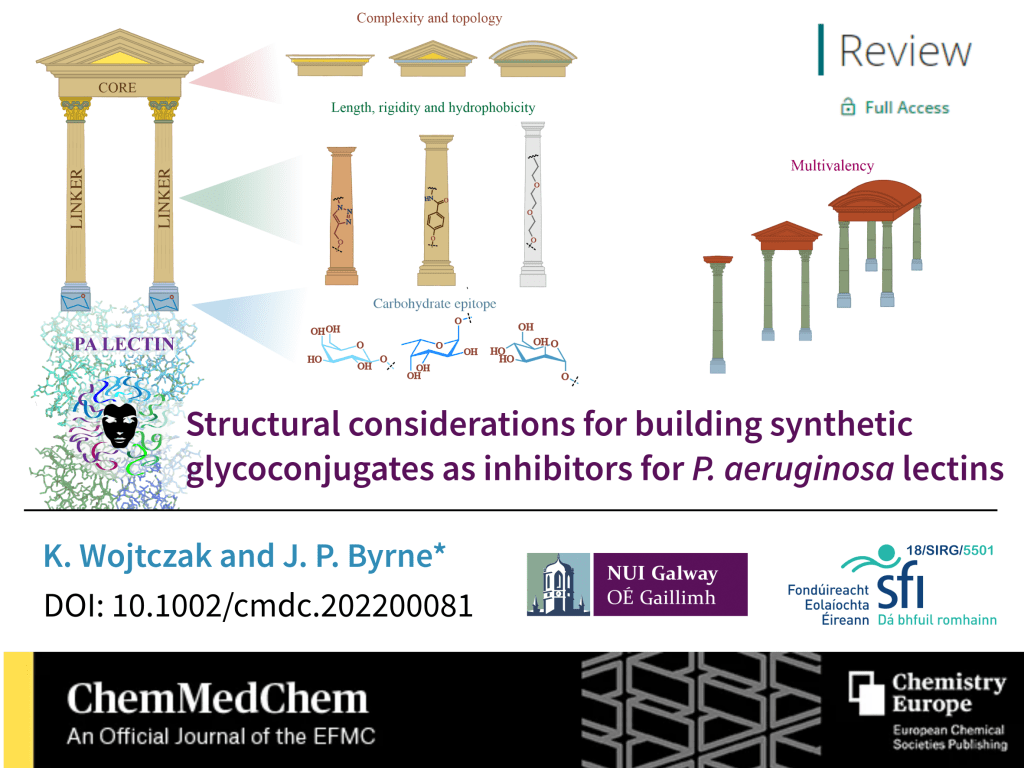
GlycoMetalGuard: Led by Dr. Joseph Byrne, GlycoMetalGuard is developing innovative antimicrobial coatings and therapies to prevent hospital-acquired infections stemming from medical devices. Dr. Byrne’s team aims to target harmful bacteria with novel sugar-based metal compounds, supporting efforts to addressing antimicrobial resistance and improving patient safety and quality of life. Combining expertise in inorganic chemistry, carbohydrate chemistry and polymer chemistry within the team and through strategic collaborations puts UCD in a strong position to lead this innovative approach.
Dr. Byrne says, “Prevention of bacterial infections is key to fighting the challenge of antimicrobial resistance. For many vulnerable or immunocompromised patients, medical devices like catheters or endotracheal tubes are essential, but they can also be a risk for infection in hospital. I’m delighted to have the support from Taighde Éireann to build new chemical tools that we hope will enhance medical devices to better protect vulnerable people in Ireland and beyond. Fundamental scientific research is at the foundation of addressing major societal challenges like antimicrobial resistance – my team’s exploration of infection-prevention and new treatments will also train several highly skilled chemistry researchers who will go on to make further contributions to our skills economy.”
For further details, see the announcements at various sources below:
UCD Chemistry | UCD News | UCD Research | Research Ireland | Silicon Republic | UCD Conway Institute