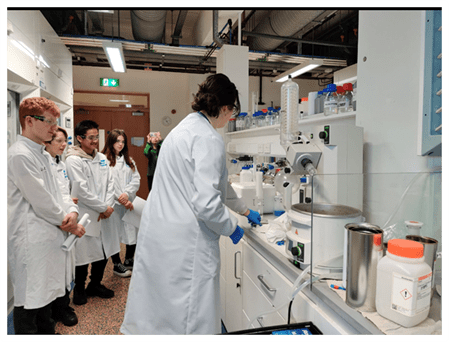
Sophie Kavanagh wrote about her experience hosting TY school students in our lab for some engaging science outreach as part of Systems Biology Ireland’s blog. The CuriosiTY Programme brought postgraduate researchers from the Conway Institute together to take part and introduce students to the world of STEM, and is supported by SFI Discover funding.
The week kicked off with a researcher showcase, allowing each of us researchers to show our journey in STEM, and our current areas of research. This was followed by some laboratory breakout sessions throughout the week, where I gave 4 small groups of students hands-on experience in the world of chemistry. I decided to centre the lab session around carbon dioxide. The sessions began with observing the interaction of dry ice with warm, soapy water, resulting in a flurry of smoky bubbles, full of carbon dioxide. The extinguishing power of carbon dioxide was demonstrated by placing dry ice in a beaker of water and pouring the dense gas over a lit tea candle, causing it to extinguish, showing some properties of carbon dioxide. Next the concept of respiration was explored, linking respiration and carbon dioxide exhalation. I pre-made some lime water for the students to experiment with. The idea here was to send home the message that even though carbon dioxide gas is a colourless, odourless and tasteless gas, we can detect its presence. Each student was given a beaker of lime water with a straw to blow bubbles and observe the colour change from colourless to milky white, and we all had a competition to see who could get their limewater to change colour the quickest. To wrap up the laboratory session, students engaged in a ‘fire-fighting’ activity. I wanted to show an important use of carbon dioxide, and how to make carbon dioxide balloons at home with some common household items (with adult supervision of course!) Students combined a balloon full of baking soda and a bottle of white vinegar, resulting in a balloon full of carbon dioxide gas. One-by-one, a tea candle was lit and students got to release their carbon dioxide-containing balloons, extinguishing the flames. This hands-on experience allowed students to showcase their inner scientists and left them both excited and knowledgeable. Each session was concluded with a tour of the lab, and a Q&A session where they asked me questions about chemistry, the Leaving Cert, and what a typical day in my life looks like.
Well done to Sophie for taking the initiative of taking part of this project with UCD Conway Institute.
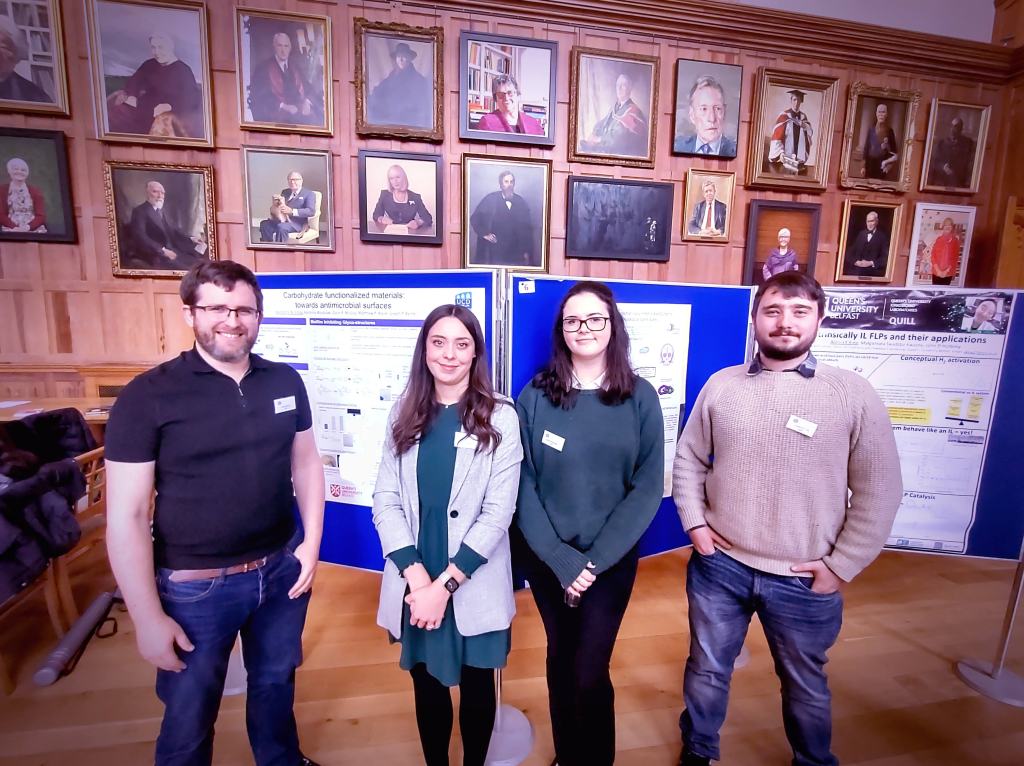
Members of the group attended the Institute of Chemistry of Ireland’s Congress in the Great Hall of Queens University Belfast this week. Two projects were presented as posters: Hannah gave some updates on SugarCoat, while Sophie and Thomas shared a poster highlighting the design of the Link4Lectin IRC Laureate project. Hannah also did an ‘elevator pitch’ for her project and was winner of a poster prize!
It was a very interesting event focussing on sustainability, and also featured the Eva Philbin Award Lecture from our UCD colleague Prof. Susan Quinn.
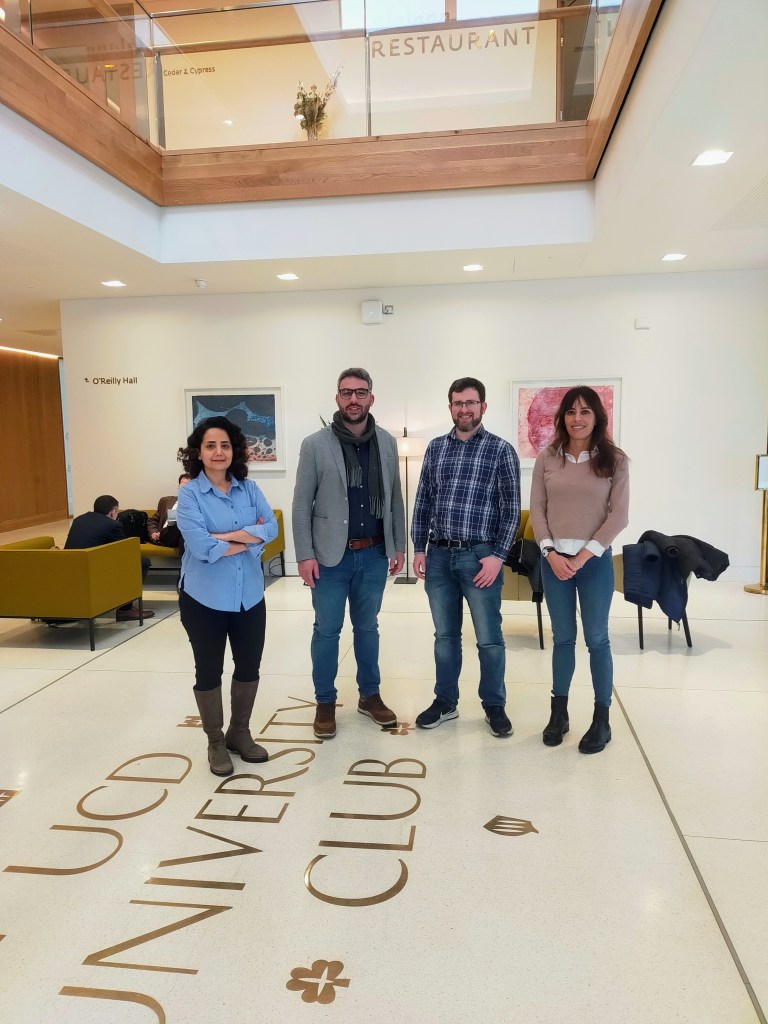
For the first time since the group moved to UCD, we had an in-person meeting of members from Galway and UCD. Karolina was returning from a research stay in Grenoble (funded by the French embassy in Ireland) and updated us on some exciting results, which Thomas, Hannah and Wanyujin gave updates on their work. Afterwards we went out for lunch at UCD Village to talk about future plans.
In January 2023, Joe joined the Faculty of UCD School of Chemistry as Lecturer in Bioinorganic Chemistry, and the Byrne Group will be moving to Dublin as well. This is a fantastic opportunity to grow the research group into the future and build on the SFI Starting Investigator Research Grant. Joe is very grateful to colleagues at NUI Galway for all their support in the last few years as he built independence – this was vital to securing his first academic post.
Dr Hannah Crory will also join the team at UCD and new PhD student Thomas Rabbitte, and we will be based in the Synthetic Inorganic Chemistry Lab in Science Centre South alongside the Phillips and Hooper Groups. Joe is one of 4 new Faculty members joining UCD at this time, part of an expanding team in the School of Chemistry (pictured below).
New staff at UCD: Dr Leila Negahdar, Dr Aniello Palma, Dr Joe Byrne, Dr Nadia Elgobashi-Meinhardt
Minister Simon Harris recently announced the Irish Research Council’s €24m investment in fundamental research through the Laureate Awards, including a new project, designed by Joe: Link4Lectin – “Mechanically linked molecular strategy for novel antimicrobial agents, pairing bioactive metal complexes with targeting of the carbohydrate-binding proteins of bacteria”. €399,000 have been committed to this project, in which Joe will lead a team of researchers in discovery of new modular antimicrobial tools. This award will allow Joe to establish independence and expand the group as he moves from University of Galway to UCD.
Announcing the awards, Minister Harris said:
“I am delighted to announce the winners of the second round of the Irish Research Council’s Starting and Consolidator Laureate Awards Programme and I congratulate each of the awardees. It is a pleasure to also welcome the Ukrainian researcher who came to Ireland from the war in Ukraine, and who will collaborate on one of the newly funded projects through the IRC’s innovative Ukrainian Researchers Scheme.
These talented researchers will no doubt contribute hugely towards the world-class excellence that is the bedrock of our research system in Ireland, pushing the boundaries of research knowledge and finding new discoveries that deepen our understanding of the world around us, by looking to the past, questioning the present, and unlocking our future potential.”
Also commenting, Dr Louise Callinan, Director of the Irish Research Council, said:
“The 48 researchers who will receive funding under the Starting and Consolidator Laureate Awards Programme have the potential to make ground-breaking advances in their respective fields and to bolster Ireland’s competitiveness in European research funding.
This is the second round of Laureate funding and many of the first-round awardees will be completing their research next year. It is testament to the success of the programme that three of the first-round awardees have already gone on to receive European Research Council funding, one as part of Ireland’s first ERC Synergy grant worth €10 million.“
The winning projects were awarded on the basis solely of excellence, and applications were assessed through a rigorous and independent international peer-review process.“
Keep an eye on our Vacancies page for recruitment as part of this award.
Joe and his colleagues in Queens University Belfast and CÚRAM were recently awarded a North South Research Programme grant to carry out the SugarCoat project, developing smart coatings for medical devices to protect from bacterial infections. Joe was interviewed by Keith Finnegan on Galway Bay FM this morning about the promise of this project in the context of antimicrobial resistance. Listen at the links below.
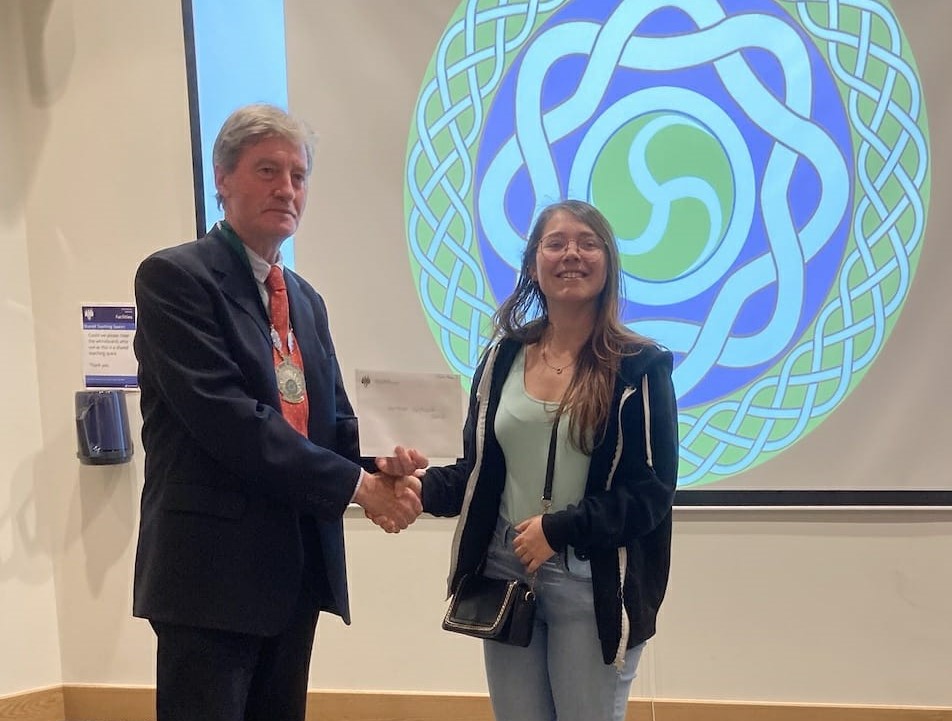
Karol delivered an oral presentation at the Irish Universities Chemistry Research Colloquium in UCD on 15 June 2022 entitled “Shining a Light on Bacteria : Lanthanide- based Glycoconjugate Molecular Sensors for Lectins”. The talk was very well received, with lots of discussion arising afterwards. The judges at the Colloquium, the highlight of the Institute of Chemistry of Ireland’s scientific calendar, awarded her a prize for her talk.
Prof. Declan Gilheany (UCD) awarding Karolina a prize for her presentation at the Colloquium
At the annual RSC Coordination and Organometallic Discussion Group Christmas meeting (UCD Dublin), everyone was asked to select an element as the focus of their talk, to celebrate the end of the International Year of the Periodic Table. Joe gave a talk celebrating the versatility of ruthenium complexes. The talk brought together two different project, linked by this transition metal.
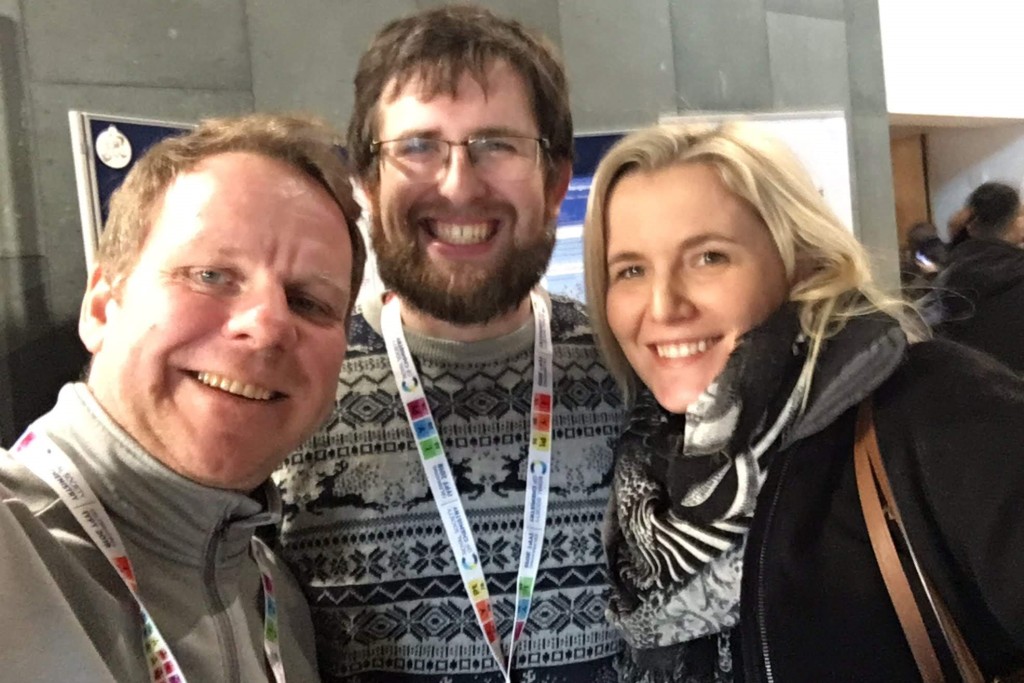
Joe with his PhD supervisor Thorri and Dawn Barry
IYPT presents for attendees
He spoke about the carbohydrate-functionalised Ru-NHC catalysts which were published recently in Dalton Transactions, as well as some Ru(II) coordination complexes (also featuring carbohydrates) which have shown antimicrobial activity (unpublished results, collaboration with Prof Thorri Gunnlaugsson and Dr Ciaran O’Reilly).
It was a very festive meeting, with inorganic chemists from all over Ireland and the UK in attendance – a great chance to catch up with old friends and new.